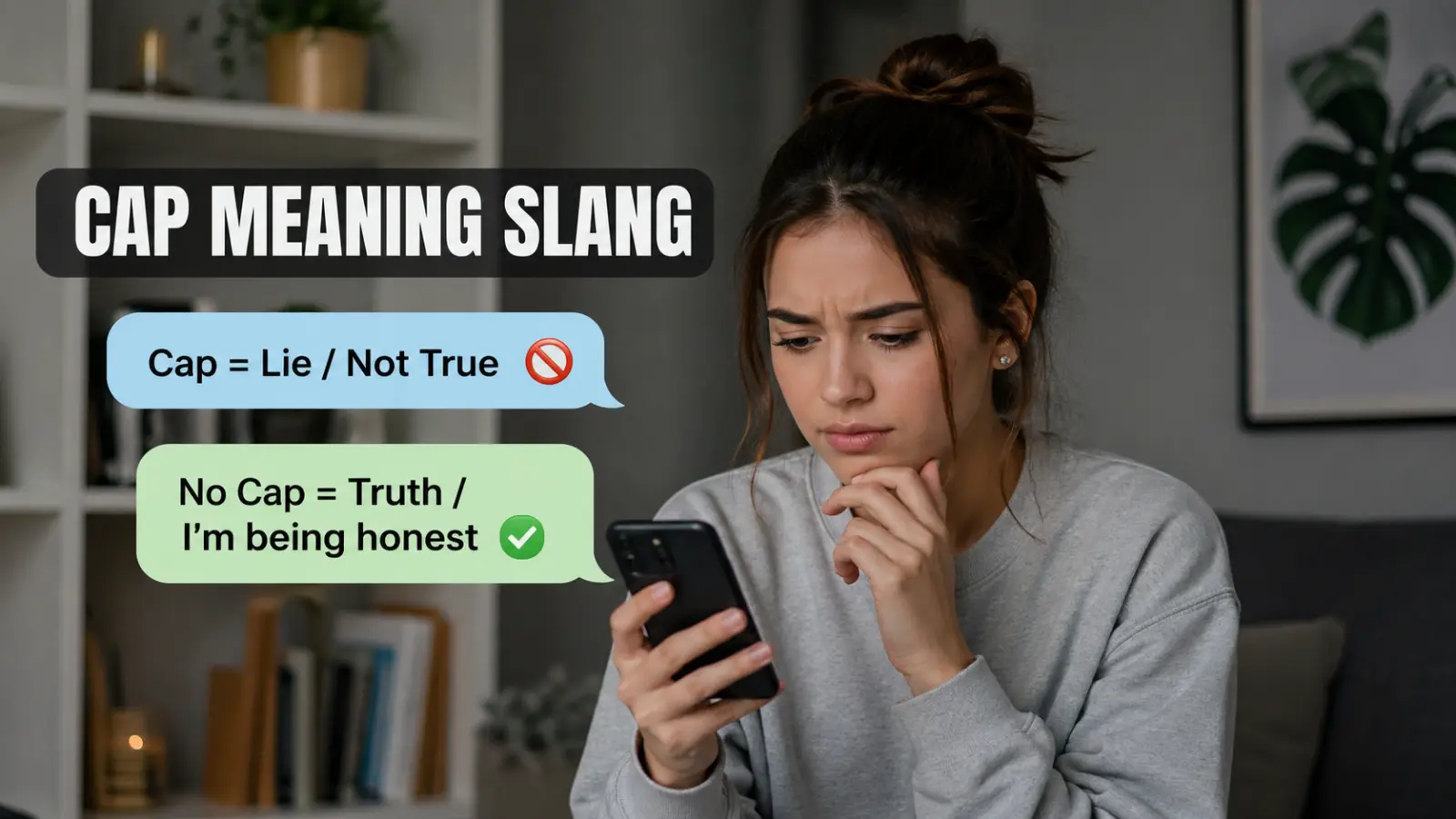
Cap meaning slang is something you’ve probably seen all over social media, chats, or even heard in conversations, especially among younger audiences.
If you’ve ever come across phrases like “That’s cap” or “No cap” and felt confused, you’re not alone.
This slang has become a big part of modern online language, and understanding it can help you communicate more naturally and confidently.
People search for this term because slang evolves fast, and meanings aren’t always obvious.
If you’re texting, scrolling through TikTok, or chatting in a game, knowing what “cap” means can save you from misunderstandings.
⚡ Quick Answer:
“Cap” in slang means a lie or something that is not true. “No cap” means you’re being honest or telling the truth.
What Does Cap Mean in Text?
In texting and online conversations, “cap” is used to call out something as false, exaggerated, or fake. When someone says “That’s cap,” they are expressing disbelief.
Cap Full Form / Definition
- Cap (slang): A lie, exaggeration, or false statement
- No cap: No lie, completely truthful
There is no official full form—“cap” is simply a slang word with cultural roots.
Meaning in Different Contexts
The meaning of “cap” can shift slightly depending on how and where it’s used.
1. Calling Out a Lie
When someone doesn’t believe a statement:
- “You scored 100% without studying? That’s cap.”
👉 Here, “cap” directly means “I don’t believe you.”
2. Expressing Honesty (No Cap)
Used to emphasize truth:
- “That was the best match I’ve ever played, no cap.”
👉 It adds seriousness or sincerity to your statement.
3. Playful Teasing
Among friends, it can be lighthearted:
- “You’re the fastest runner here? Cap!”
👉 Not serious—just joking or teasing.
4. Online Arguments or Debates
Used to challenge someone:
- “Everything you said is cap.”
👉 Can sound confrontational depending on tone.
Is It Rude, Offensive, or Neutral?
“Cap” is generally neutral slang, but tone and context matter a lot.
When It’s Neutral:
- Casual conversations
- Friendly chats
- Social media comments
When It Can Feel Rude:
- In arguments
- When dismissing someone’s opinion
- If used aggressively (“Stop capping!”)
Professional Context:
- ❌ Not appropriate for emails, work, or academic writing
Where Is It Commonly Used?
The phrase “cap meaning slang” is widely associated with digital culture.
Common Platforms:
- TikTok
- Snapchat
- Twitter/X
- YouTube comments
Other Places:
- Gaming chats (e.g., multiplayer games)
- Group chats with friends
- Meme culture
It’s especially popular among Gen Z users, but it’s spreading across all age groups.
Real-Life Examples of Usage
Here are more detailed real-world examples:
- “You finished that whole assignment in 10 minutes? Cap.”
- “This burger is amazing, no cap.”
- “Stop capping, I saw what really happened.”
- “No cap, that was the funniest video I’ve seen today.”
- “You said you’d call me yesterday—that’s cap.”
Origin and Background of the Slang
The slang “cap” comes from African American Vernacular English (AAVE). Historically, “capping” meant bragging, exaggerating, or telling tall tales.
Evolution of the Term:
- Early meaning: Boasting or exaggerating
- Modern meaning: Lying or being dishonest
The phrase gained widespread popularity through:
- Hip-hop culture
- Viral memes
- Social media platforms (especially TikTok)
By the late 2010s, “cap” and “no cap” became global slang terms.
Comparison with Similar Slang
Understanding similar slang helps clarify usage:
| Slang Term | Meaning | Tone | Example |
|---|---|---|---|
| Cap | Lie / false | Casual | “That’s cap.” |
| No Cap | Truth / honest | Emphatic | “No cap, I’m serious.” |
| Fake | Not real | Neutral | “That looks fake.” |
| Lie | False statement | Formal | “That is a lie.” |
| BS | Nonsense | Slightly rude | “That’s BS.” |
| Flex | Show off | Playful | “Stop flexing.” |
When to Use and When to Avoid
✅ Use “Cap” When:
- Talking with friends
- Posting memes or comments
- Casual texting
- Gaming conversations
❌ Avoid “Cap” When:
- Writing professional emails
- Academic assignments
- Formal presentations
- Talking to elders (in some cultures)
Polite Alternatives
If you want to sound more respectful or formal:
- “I don’t think that’s accurate.”
- “That might not be correct.”
- “Are you sure about that?”
- “That seems unlikely.”
These alternatives maintain politeness and clarity.
Why People Use This Slang
“Cap” is popular for several reasons:
1. Simplicity
It’s short, easy to type, and quick to understand.
2. Expressiveness
It clearly shows disbelief or honesty in just one word.
3. Trend Factor
Using slang helps people stay relevant and connected to trends.
4. Social Identity
It creates a sense of belonging, especially among younger groups.
Impact of Using Slang in Communication
Positive Effects:
- Makes conversations fun and engaging
- Builds connection with peers
- Reflects modern communication style
Negative Effects:
- Can confuse people unfamiliar with slang
- May sound disrespectful in serious discussions
- Not suitable for professional communication
Is It Safe for Social Media?
Yes, “cap” is completely safe for social media.
However, keep these tips in mind:
- Use it appropriately based on tone
- Avoid using it in sensitive topics
- Don’t overuse it—it can lose impact
Examples in Different Contexts
Friendly
- “You’re the best cook ever, no cap!”
Casual
- “That excuse sounds like cap.”
Argumentative
- “Stop capping—you know that’s not true.”
Gaming Context
- “You said you carried the team? Cap.”
- “No cap, that was a perfect strategy.”
Social Media
- “Best movie of the year, no cap 🎬”
- “He said he woke up at 5 AM… cap 😂”
FAQs About Cap Meaning Slang
1. What does “cap” mean in slang?
It means a lie or something that is not true.
2. What does “no cap” mean?
It means you are being honest or telling the truth.
3. Is “cap” rude?
Not usually, but it can sound rude depending on tone and context.
4. What does “stop capping” mean?
It means “stop lying” or “stop exaggerating.”
5. Is “cap” used globally?
Yes, it’s widely used around the world, especially online.
6. Can older people use this slang?
Yes, but it’s mostly popular among younger audiences.
Conclusion
Understanding cap meaning slang is essential if you want to stay updated with modern communication. At its core, “cap” means a lie, while “no cap” means honesty. It’s simple, expressive, and widely used in everyday conversations online.
However, context is everything. While it works perfectly in casual chats and social media, it’s not suitable for formal settings. By using it appropriately, you can communicate more naturally while avoiding misunderstandings.

I’m Amara Hope, a writer who believes words can heal, inspire, and bring people closer. I love creating heartfelt wishes and joyful messages that brighten someone’s day. Every line I write carries a bit of love, hope, and positivity. Through my writing, I aim to spread kindness and make every moment meaningful.