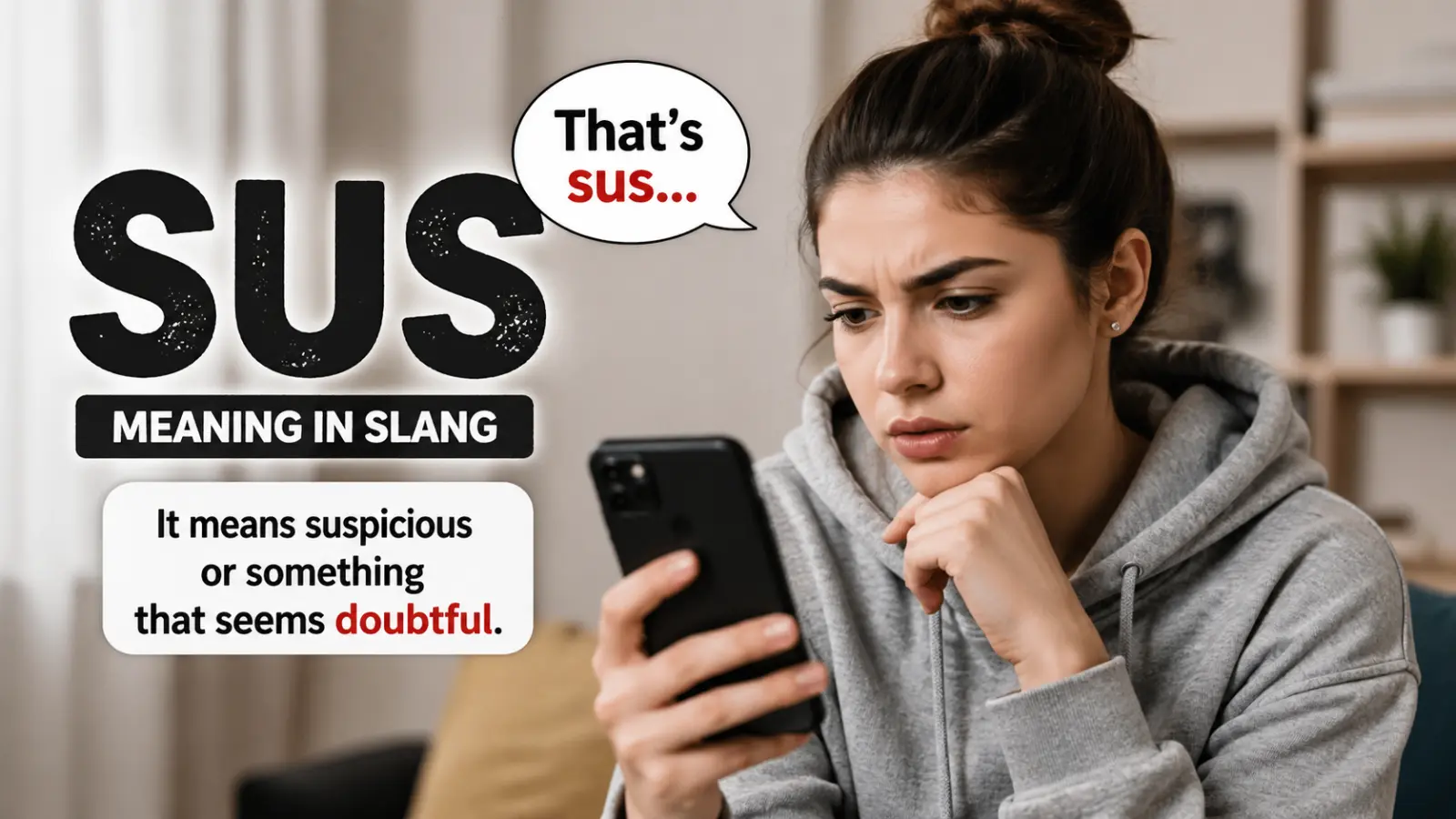
Sus meaning slang is one of the most popular internet expressions used in texting, gaming, and social media today.
If you spend time on platforms like TikTok, Instagram, or online games like Among Us, you’ve probably seen someone call another person “sus.” But what does it actually mean, and why is it so widely used?
The term “sus” has become a shortcut word in modern digital communication. People use it when they think something or someone looks suspicious, doubtful, or not fully trustworthy. It is short, catchy, and easy to type, which is why it quickly became part of everyday online slang.
This slang is especially popular among Gen Z and gamers, where fast communication matters. Instead of typing long sentences like “That looks suspicious,” people simply say “That’s sus.”
Quick Answer:
“Sus” is slang for “suspicious” and is used to describe something or someone that seems untrustworthy, doubtful, or questionable.
What does Sus meaning slang mean in text?
The phrase sus meaning slang comes from the shortened form of the word suspicious. In internet language, “sus” is used to point out behavior, actions, or situations that seem strange or not fully believable.
For example:
- If someone acts strangely in a game, players might say, “He is sus.”
- If a story doesn’t sound true, people might respond, “That sounds sus.”
Simple Definition:
- Sus = Suspicious or questionable behavior
It is not a formal word but a casual internet slang term used mainly in informal communication.
Meaning in different contexts
The meaning of “sus” can slightly change depending on where and how it is used:
1. Gaming context
In games like Among Us, “sus” is used to identify players who might be the impostor.
2. Social media context
On TikTok or Instagram, people use “sus” to react to funny or doubtful content.
3. Chat conversations
Friends use it jokingly when someone behaves oddly or hides something.
Is “sus” rude, offensive, or neutral?
In most cases, sus is neutral and playful. It is not a serious insult.
However, tone matters:
- Friendly tone → joking or playful
- Serious tone → can imply distrust
- Repeated accusation → may feel offensive
So, while “sus” is usually harmless, it can sometimes sound accusatory depending on context.
Where is “sus” commonly used?
The slang “sus” is widely used in:
- Online games (especially Among Us)
- TikTok comments
- Instagram reels
- Snapchat chats
- WhatsApp conversations
- Meme culture
It has become a global slang term understood by internet users worldwide.
Real-life examples of usage
Here are different examples showing how “sus” is used in daily digital communication:
Friendly tone:
- “You bought everyone ice cream? That’s sus but thanks!”
Casual conversation:
- “Why are you acting so quiet today? Kinda sus.”
Argumentative tone:
- “Your explanation sounds sus, I don’t fully believe it.”
Gaming context:
- “Red is acting sus, I think he is the impostor.”
Origin and background of “sus”
The slang “sus” became widely popular from the word “suspicious,” but its rise in internet culture is strongly linked to the online multiplayer game Among Us.
In the game, players must identify impostors hiding among the crew. Players started using “sus” as a quick way to say someone is suspicious. This gaming trend then spread to TikTok, memes, and general social media use.
Over time, “sus” became part of everyday online vocabulary, even outside gaming.
Comparison with similar slang terms
| Slang | Full Meaning | Usage | Tone |
|---|---|---|---|
| Sus | Suspicious | Something seems doubtful | Neutral/Playful |
| Shady | Not trustworthy | Someone acting secretly | Slightly negative |
| Sketchy | Unclear or unsafe | Situation feels risky | Negative |
| Fishy | Something feels wrong | Doubtful situation | Neutral |
When to avoid using “sus” and when to use it
use:
- Casual chats with friends
- Gaming discussions
- Meme or funny situations
- Social media comments
When to avoid:
- Professional emails
- Formal communication
- Serious accusations
- Sensitive discussions
Using slang in the wrong place can make communication unclear or unprofessional.
Why people use this slang
People use “sus” because:
- It is short and easy to type
- It saves time in fast conversations
- It fits meme culture
- It is widely understood online
- It adds humor to communication
In digital communication, speed and simplicity matter, and “sus” perfectly fits that need.
Impact of using slang in communication
Slang like “sus” has changed how people talk online. It makes communication:
- Faster
- More expressive
- More casual
- More relatable among younger audiences
However, overuse of slang can reduce clarity in formal writing or professional communication.
Is “sus” safe for social media?
Yes, “sus” is generally safe for social media use. It is not harmful or offensive. However, users should always consider context, especially when referring to real people, to avoid misunderstandings.
FAQs about Sus meaning slang
1. What does “sus” stand for in slang?
“Sus” stands for “suspicious” in internet slang.
2. Is “sus” a bad word?
No, it is not a bad word. It is a casual slang term used online.
3. Where did “sus” become popular?
It became popular from the game Among Us and social media platforms like TikTok.
4. Can I use “sus” in formal writing?
No, it is best to avoid slang like “sus” in formal or professional writing.
5. What is the full form of “sus” in text?
The full form of “sus” is “suspicious.”
6. Is “sus” still popular in 2026?
Yes, it is still widely used in online chats, memes, and gaming communities.
Conclusion
The sus meaning slang is a simple but powerful internet term that means “suspicious.” It is widely used in gaming, social media, and casual chats to quickly express doubt or uncertainty about someone or something.
While it is mostly harmless and fun, its meaning depends on tone and context. In friendly conversations, it adds humor, but in serious situations, it may sound accusatory.
Understanding slang like “sus” helps improve digital communication and keeps you updated with modern internet culture.

I’m Emily Hart, a writer who pours warmth and emotion into every wish I create. I love helping people express love, gratitude, and joy through heartfelt words. Writing about life’s special moments brings me true happiness. My goal is to inspire kindness and connection—one beautiful message at a time.