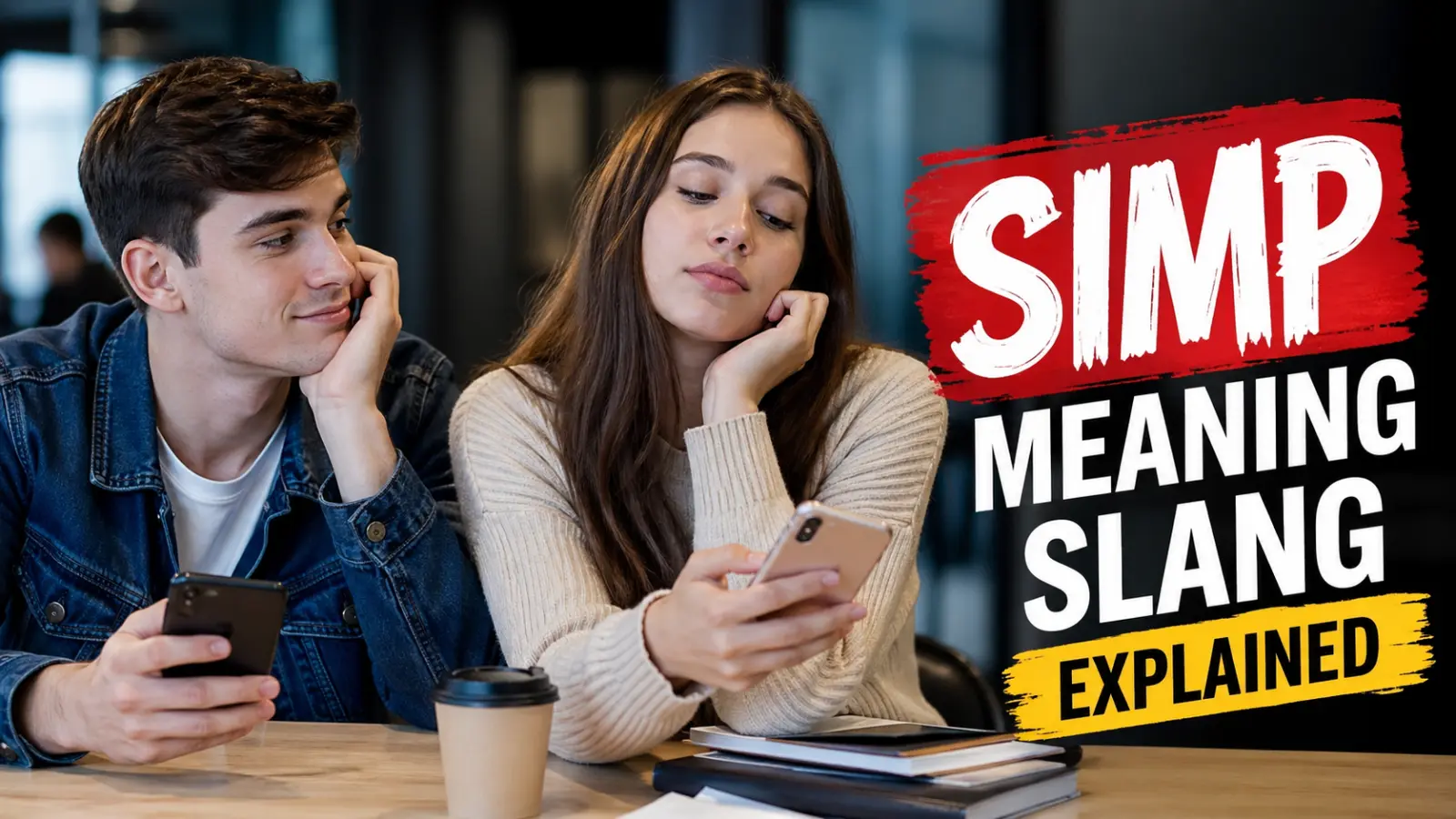
Simp meaning slang is one of the most searched internet terms today, especially among social media users, gamers, and younger audiences.
If you’ve ever seen someone called a “simp” in a comment section or chat, you might have wondered what it actually means and whether it’s meant as a joke or an insult.
Slang words like “simp” spread quickly online, often changing meaning depending on context. That’s why understanding how and when to use them is important.
In this guide, you’ll learn everything about the term “simp,” including its definition, origin, usage, and whether it’s appropriate in different situations.
⚡ Quick Answer:
A simp is someone who shows excessive attention, admiration, or affection toward someone (usually romantically), often without getting the same interest in return.
What Does Simp Meaning Slang in Text?
The term “simp” in slang refers to a person—typically a man—who goes out of their way to please someone they like, often ignoring their own self-respect or boundaries.
Simple Definition:
- A person who tries too hard to impress someone they are attracted to
- Someone who prioritizes another person excessively, often without mutual interest
Simp Full Form
“Simp” is not officially an acronym, but some people jokingly expand it as:
- S – Sucker
- I – Idolizing
- M – Mediocre
- P – Person
However, this “full form” is informal and not widely accepted.
Meaning in Different Contexts
The meaning of “simp” can change depending on how it’s used:
1. Romantic Context
Someone overly devoted to a crush who doesn’t return the same feelings.
2. Social Media Context
Used in comments when someone praises or defends a person too much.
3. Gaming Context
Gamers may call someone a simp if they favor a female player unfairly.
4. Humorous Context
Friends may jokingly call each other simps without serious intent.
Is It Rude, Offensive, or Neutral?
The word “simp” can be:
- ⚠️ Rude or insulting – When used to mock someone
- 😄 Playful – Among friends in a joking way
- 😐 Neutral – When used casually without strong intent
👉 Tone and context matter a lot. What sounds funny in one situation can feel disrespectful in another.
Where Is It Commonly Used?
You’ll often see “simp” used on:
- Social media platforms like Instagram, TikTok, and Twitter
- Gaming chats and live streams
- YouTube comment sections
- Online forums and memes
It became especially popular through meme culture and viral content.
Real-Life Examples of Usage
Here are some examples to understand how “simp” is used:
- “Bro, you bought her gifts again? Stop being a simp!”
- “He’s always liking her posts—total simp behavior.”
- “Relax, I’m not simping, I just respect her.”
Origin and Background of the Slang
The word “simp” actually dates back much earlier than social media. It was derived from the word “simpleton,” meaning a foolish or naive person.
However, its modern meaning became popular around 2019–2020 through platforms like TikTok and Twitch. Streamers and influencers used it frequently, and it quickly spread across the internet.
Comparison with Similar Slang
| Slang Term | Meaning | Tone | Usage |
|---|---|---|---|
| Simp | Overly attentive to someone romantically | Mild insult | Social media, chats |
| White Knight | Defends someone (often a woman) excessively | Negative | Online debates |
| Fanboy | Extremely devoted fan | Neutral | Entertainment |
| Try-hard | Someone trying too hard to impress | Slightly negative | General use |
When to Use and Avoid “Simp”
✅ When You Can Use It
- Among friends jokingly
- In memes or casual conversations
- When tone is clearly lighthearted
❌ When to Avoid It
- In professional communication
- With people you don’t know well
- When it may hurt someone’s feelings
Polite Alternatives
If you want to avoid sounding rude, you can use:
- “Overly devoted”
- “Trying too hard”
- “Very affectionate”
- “Admirer”
These phrases communicate the idea without sounding offensive.
Why Do People Use This Slang?
People use “simp” because:
- It’s short and easy to type
- It’s popular in meme culture
- It adds humor to conversations
- It expresses opinions quickly
Slang like this helps people connect, especially in informal digital communication.
Impact of Using Slang in Communication
Using slang like “simp” can:
👍 Positive Effects:
- Make conversations fun and relatable
- Help you fit into online communities
👎 Negative Effects:
- Cause misunderstandings
- Sound disrespectful if misused
- Reduce clarity in serious discussions
Is It Safe for Social Media?
Yes, but with caution.
- ✔ Safe in casual posts and comments
- ⚠ Risky if used to insult or bully
- ❌ Not suitable for professional profiles
Always think about how your message might be interpreted.
Examples Section: Different Tones
😊 Friendly
- “Haha, you’re such a simp for your girlfriend 😂”
😎 Casual
- “He’s simping hard in the comments section.”
😡 Argumentative
- “Stop acting like a simp and think logically.”
🎮 Gaming/Social Media
- “Don’t give her special treatment just because you’re simping.”
FAQs About Simp Meaning Slang
1. What does simp mean in slang?
It refers to someone who shows excessive attention or affection, usually without getting the same in return.
2. Is simp a bad word?
Not always. It can be playful or insulting depending on tone and context.
3. What does simp stand for?
It doesn’t officially stand for anything, though some use informal meanings.
4. Can girls be called simps?
Yes, although it’s more commonly used for men, it can apply to anyone.
5. Is simp used worldwide?
Yes, especially in online communities and social media platforms globally.
6. Should I use simp in professional settings?
No, it’s informal slang and not appropriate for professional communication.
Conclusion
Understanding simp meaning slang helps you navigate modern online conversations more confidently. While the word usually describes someone who shows excessive admiration or affection, its tone can range from playful to insulting depending on how it’s used.
The key is context. Use it carefully, especially around people you don’t know well, and avoid it in formal situations. Like all slang, “simp” is best used where it fits naturally and respectfully.

I’m Lila Grace, a passionate writer who finds joy in crafting thoughtful wishes and uplifting messages. I love turning simple words into meaningful expressions that touch hearts. My goal is to help people celebrate life’s beautiful moments through genuine writing. Each article I write reflects my belief in kindness, connection, and happiness.