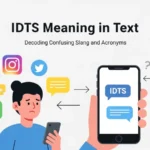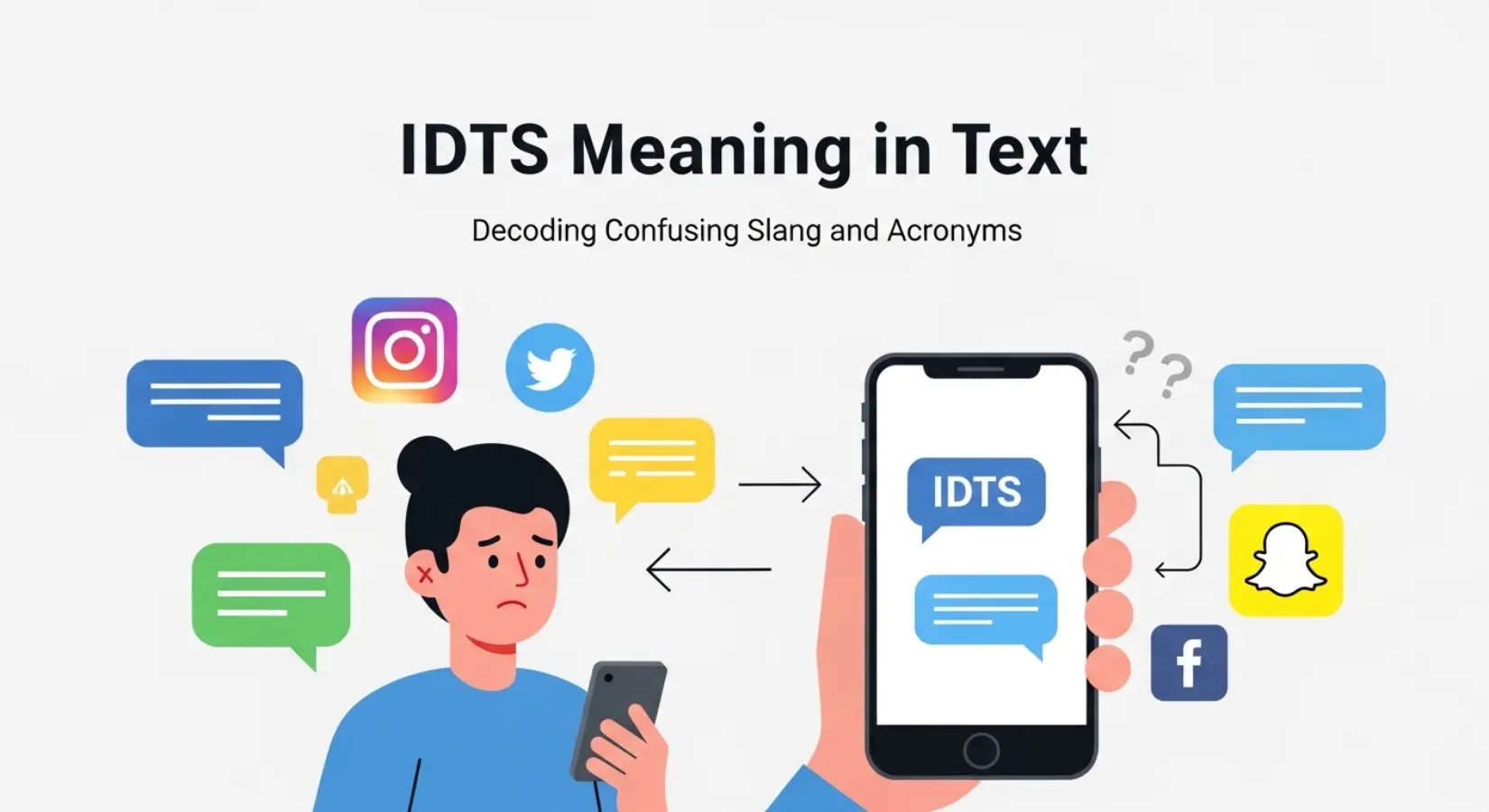
Idts meaning in text is a common search query for people trying to understand modern texting slang.
As digital communication continues to evolve, short forms like “idts” have become a natural part of everyday conversations, especially in messaging apps, social media, and gaming chats.
You might see someone reply with “idts” and wonder if they’re agreeing, disagreeing, or just unsure.
These small abbreviations can carry subtle meanings depending on tone and context, which is why understanding them properly matters.
If you’re chatting with friends or browsing online comments, knowing what “idts” means helps you respond appropriately and avoid misunderstandings.
⚡ Quick Answer
“IDTS” means “I don’t think so.” It’s used to express doubt, mild disagreement, or uncertainty in a casual and often polite way.
What Does Idts Mean in Text?
The phrase idts meaning in text refers to an abbreviation used in informal communication.
- Full form: IDTS = I Don’t Think So
- Category: Internet slang / texting abbreviation
- Primary function: To express doubt or disagreement politely
Unlike a direct “no,” “idts” softens the response. It suggests hesitation rather than a firm rejection, making it useful in social interactions where tone matters.
Deep Dive: Understanding the Meaning
At its core, “idts” communicates three key ideas:
1. Doubt
The speaker is unsure about something.
Example:
“Is this the right answer?”
→ “Idts.”
2. Disagreement
The speaker doesn’t agree but wants to keep things light.
Example:
“That was the best match ever.”
→ “Idts, I’ve seen better.”
3. Soft Refusal
It acts as a polite way to say “no.”
Example:
“Will you join us tonight?”
→ “Idts, I’m busy.”
Meaning in Different Contexts
Casual Conversations
In daily chats, “idts” is quick and natural.
- “Idts it will rain today.”
- “Idts he knows about this.”
Friendly Tone
Among friends, it feels relaxed and non-serious.
- “Idts you need to worry 😂”
Argumentative Situations
Here, tone becomes important. It can sound dismissive if used bluntly.
- “Idts that’s true.”
👉 Adding explanation makes it better:
“Idts that’s true, because the data says otherwise.”
Social Media & Comments
Often used as a short reaction.
- “This trend will never die!”
→ “Idts 💀”
Gaming Context
Gamers use it to express doubt about outcomes.
- “We can win this round!”
→ “Idts, they’re too strong.”
Is “IDTS” Rude, Offensive, or Neutral?
✔️ Generally Neutral
“IDTS” is not inherently rude. It’s widely accepted in casual communication.
⚠️ Context Matters
Tone depends on:
- Relationship between users
- Conversation topic
- Use of punctuation/emojis
Examples of Tone Differences:
- Neutral: “Idts.”
- Friendly: “Idts haha 😄”
- Rude (if abrupt): “Idts.” (no context, no explanation)
👉 Tip: Add context or emojis to avoid sounding cold.
Where Is “IDTS” Commonly Used?
You’ll frequently find “idts” in:
- Messaging apps: WhatsApp, Messenger
- Social media: Instagram, TikTok, X (Twitter)
- Online forums: Reddit, Discord
- Gaming chats: Multiplayer games
Where It’s NOT Appropriate:
- Business emails
- Academic writing
- Formal presentations
Real-Life Examples of Usage
Everyday Chat
- “Idts I can finish this today.”
- “Idts that’s a good idea.”
Social Media
- “This movie deserves an award.”
→ “Idts.”
Work (informal team chat only)
- “Idts this approach will work, maybe try another one.”
Origin and Background of “IDTS”
“IDTS” originated from early internet and SMS culture in the late 1990s and early 2000s. During that time:
- Character limits encouraged shorter messages
- Users created abbreviations for speed
- Slang evolved into widely recognized shortcuts
It belongs to the same family as:
- LOL (Laugh Out Loud)
- IDK (I Don’t Know)
- IMO (In My Opinion)
Over time, these abbreviations became standard in digital communication.
Comparison With Similar Slang
| Slang | Full Form | Meaning | Tone | Usage |
|---|---|---|---|---|
| IDTS | I Don’t Think So | Doubt/disagreement | Neutral | Casual chats |
| IDK | I Don’t Know | Uncertainty | Neutral | All contexts |
| IMO | In My Opinion | Personal view | Polite | Discussions |
| IDC | I Don’t Care | Lack of interest | Often rude | Risky |
| NGL | Not Gonna Lie | Honest opinion | Casual | Social media |
When to Use and When to Avoid
✔️ Use “IDTS” When:
- Talking to friends
- Chatting casually online
- Expressing mild disagreement
- Responding quickly
❌ Avoid “IDTS” When:
- Writing formal emails
- Speaking to authority figures
- Discussing serious topics
- Wanting to sound professional
Polite Alternatives to “IDTS”
If you need a more respectful or formal tone:
- “I don’t think that’s correct.”
- “I’m not sure about that.”
- “That may not be accurate.”
- “I believe otherwise.”
These alternatives help maintain professionalism.
Why People Use “IDTS”
1. Speed & Efficiency
Typing “idts” is faster than writing a full sentence.
2. Casual Communication Style
It fits the relaxed tone of modern messaging.
3. Social Trends
Using slang helps people feel connected and up-to-date.
4. Emotional Softening
It makes disagreement feel less harsh.
Impact of Using Slang in Communication
Positive Effects
- Saves time
- Makes conversations engaging
- Builds social connection
Negative Effects
- Can cause confusion
- May appear unprofessional
- Tone can be misinterpreted
👉 Key Insight: Slang works best when both people understand it.
Is It Safe for Social Media?
Yes, “idts” is safe and widely accepted.
Best Practices:
- Use in casual posts/comments
- Avoid in serious discussions
- Match tone with audience
Examples in Different Tones
Friendly
- “Idts you need to stress about it 😊”
Casual
- “Idts it’s happening.”
Argumentative
- “Idts that’s true, check the facts.”
Gaming
- “Idts we can beat them this round.”
FAQs
1. What does IDTS stand for?
It stands for “I Don’t Think So.”
2. Is IDTS the same as saying no?
Not exactly. It’s a softer, less direct way of saying “no.”
3. Can IDTS be misunderstood?
Yes, especially without context or tone indicators like emojis.
4. Is IDTS formal or informal?
It’s strictly informal and used in casual communication.
5. Should I use IDTS in professional settings?
No, use full sentences instead.
6. Why is IDTS so popular?
Because it’s quick, simple, and widely understood in digital communication.
Conclusion
Understanding the idts meaning in text gives you a clear advantage in modern communication. It simply means “I don’t think so”, but its real value lies in how it softens disagreement and keeps conversations light.
While it’s perfect for casual chats, always consider your audience and context before using it. Choosing the right tone, whether slang or formal language can make your communication more effective and respectful.
Mastering terms like “idts” isn’t just about slang—it’s about communicating clearly in a fast-paced digital world.

I’m Maya Faith, a passionate writer who loves creating words that uplift and encourage others. Through my writing, I hope to bring comfort, peace, and a spark of faith to every reader. I believe that even in life’s storms, hope always finds a way to shine through. When I’m not writing, I enjoy quiet mornings, heartfelt prayers, and a good cup of coffee.