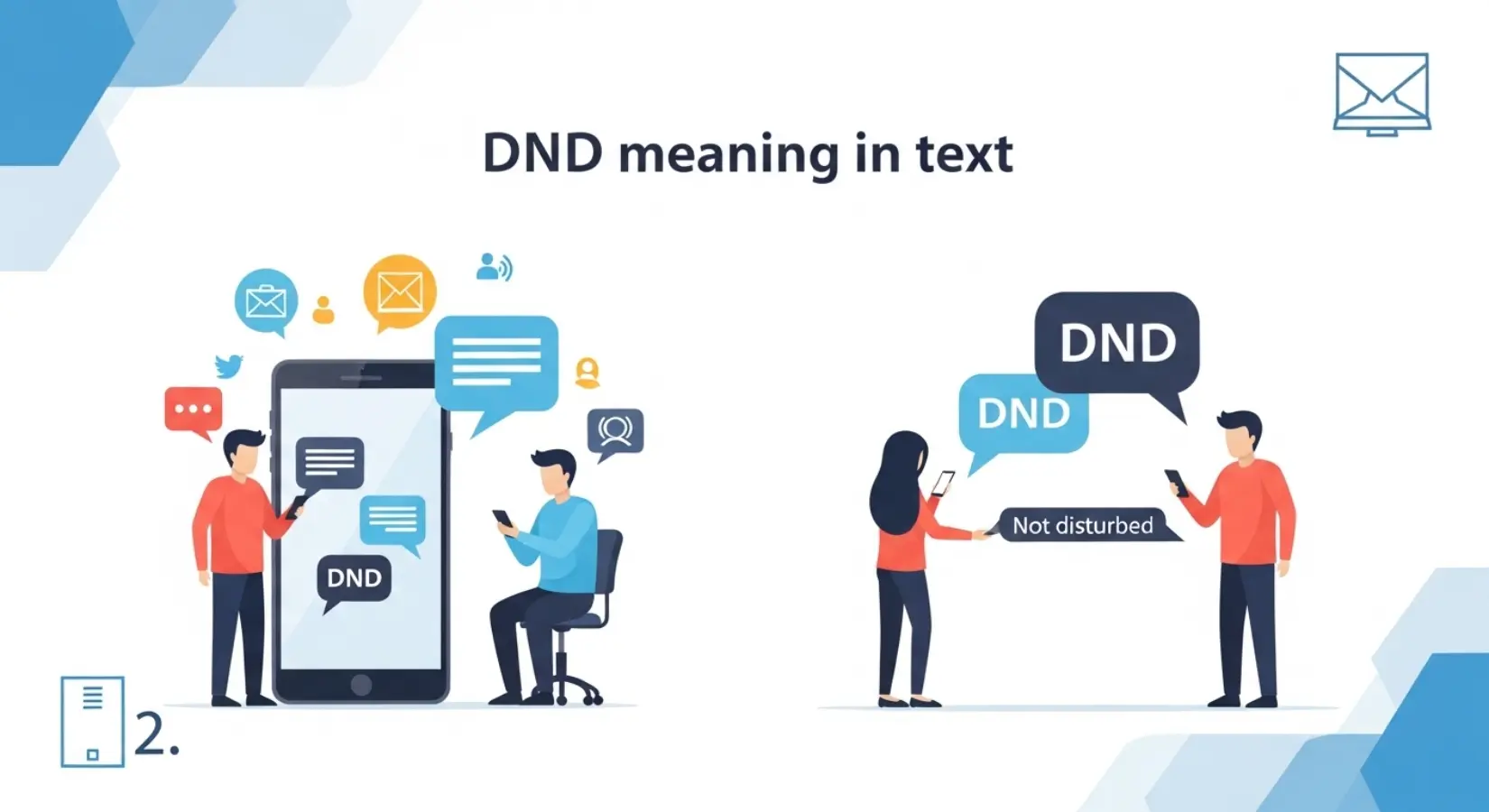
Dnd meaning in text is a commonly searched phrase because people often see “DND” in messages, social media, or gaming chats and feel confused about what it actually means.
In today’s digital world, slang and short forms are widely used to save time and make communication faster. However, not everyone understands these abbreviations, especially when they are used in different contexts.
DND is one of those short forms that can have slightly different meanings depending on where and how it is used. Most of the time, it appears in chats, WhatsApp statuses, gaming platforms, or social media posts. Understanding it helps you communicate better and avoid misunderstandings in online conversations.
⚡ Quick Answer:
“DND” in text usually means “Do Not Disturb”, used to tell others that someone is not available or does not want to be disturbed.
What does DND mean in text?
The abbreviation DND stands for “Do Not Disturb.” It is used in digital communication to show that a person is busy, resting, or not available for conversation.
📌 Full Form of DND:
- DND = Do Not Disturb
It is commonly used in:
- Messaging apps like WhatsApp, Messenger, and Telegram
- Social media statuses
- Phone settings
- Gaming platforms
When someone writes “DND,” they are basically requesting privacy or uninterrupted time.
Meaning of DND in Different Contexts
The meaning of DND can slightly change depending on the situation:
📱 1. In Messaging Apps
It means the person is busy and does not want messages or calls.
📵 2. On Phone Settings
DND mode blocks notifications, calls, and alerts to avoid distractions.
🎮 3. In Gaming
Players use DND when they are focused on gameplay and don’t want interruptions.
💬 4. On Social Media
It may appear in bios or status updates to show someone is offline or taking a break.
Is DND rude, offensive, or neutral?
DND is generally neutral and not offensive.
However, tone matters:
- ✔ Neutral: “I’m on DND right now, talk later”
- ❌ Rude tone: “I’m on DND, don’t message me ever”
So, the meaning depends on how it is written and the context of the conversation.
Where is DND commonly used?
DND is widely used across digital platforms:
- WhatsApp status updates
- Instagram bios
- Snapchat status
- Phone “Do Not Disturb” feature
- Online gaming chats
- Work or study focus time announcements
It is especially popular among students, gamers, and professionals who need focused time.
Real-life Examples of DND in Text
Here are some simple examples showing how DND is used in different situations:
😊 Friendly Context
- “I’m on DND mode, will call you later 😊”
💬 Casual Chat
- “DND rn, watching a movie”
😡 Argumentative Tone
- “I’m on DND, stop messaging me again and again”
🎮 Gaming Context
- “Going DND, ranked match starting now 🎮”
📱 Social Media Status
- “DND mode: self-care time ✨”
Origin and Background of DND
The term Do Not Disturb (DND) originally comes from phone and computer settings. It was designed to help users avoid interruptions from notifications, calls, and alerts.
Over time, this technical term became part of internet slang. People started using it in chats and social media to express that they are unavailable or need personal time.
Today, it is a widely recognized digital expression across the world.
Comparison with Similar Slang Terms
Here is a simple comparison between DND and similar expressions:
| Slang | Full Form | Meaning | Usage |
|---|---|---|---|
| DND | Do Not Disturb | Not available or busy | Messaging, phone, gaming |
| BRB | Be Right Back | Temporarily away | Chats |
| AFK | Away From Keyboard | Not active on device | Gaming, online chats |
| Offline | Not connected | Not online at all | Social media, apps |
DND is more about blocking interruptions, while others show temporary absence.
When to use DND and when to avoid it
✔ When to use DND:
- When studying or working
- During meetings or classes
- While resting or sleeping
- When focusing on gaming
- When you need personal time
❌ When to avoid DND:
- During urgent conversations
- Professional emergencies
- When expecting important calls or messages
Using it correctly helps maintain healthy communication boundaries.
Polite alternatives to DND
If you want to sound more polite or soft, you can use:
- “Busy right now, will reply later”
- “Taking some time off”
- “In a meeting, talk soon”
- “Offline for a while”
These alternatives feel more friendly in formal or professional chats.
Why people use DND in text
People use DND for several reasons:
- To avoid distractions
- To focus on work or studies
- To take mental rest
- To manage social boundaries
- To control phone notifications
- To avoid unnecessary interruptions
In a fast digital world, DND helps people stay productive and mentally relaxed.
Impact of using DND in communication
Using DND has both positive and negative impacts:
👍 Positive Impact:
- Improves focus and productivity
- Reduces stress from notifications
- Helps maintain personal time
👎 Negative Impact:
- Can delay important communication
- May seem unfriendly if misused
- Might cause misunderstanding if not explained
So, balance is important when using it.
Is DND safe for social media?
Yes, DND is completely safe for social media use. It does not contain harmful or offensive meaning. However, users should be careful with tone so it does not sound rude or disrespectful.
FAQs about DND meaning in text
1. What does DND mean in chat?
DND means Do Not Disturb, used when someone is busy or unavailable.
2. Is DND a slang word?
Yes, it is a common internet slang abbreviation.
3. What is DND full form in WhatsApp?
It stands for Do Not Disturb.
4. Is DND rude to use?
No, it is neutral, but tone can make it sound rude.
5. Can I use DND in Instagram bio?
Yes, many people use it in bios to show they are offline or busy.
6. What is the difference between DND and AFK?
DND means not to disturb, while AFK means away from keyboard or inactive.
Conclusion
Understanding DND meaning in text helps you communicate more clearly in today’s digital world. DND stands for Do Not Disturb, and it is mainly used to show that someone is busy, resting, or not available for interaction.
It is a simple but powerful expression that helps people manage their time and attention online. However, context matters—using it politely ensures better communication and avoids misunderstandings.
Whether you are using it in chats, gaming, or social media, DND is a useful abbreviation that reflects modern digital communication habits.

I’m Amara Hope, a writer who believes words can heal, inspire, and bring people closer. I love creating heartfelt wishes and joyful messages that brighten someone’s day. Every line I write carries a bit of love, hope, and positivity. Through my writing, I aim to spread kindness and make every moment meaningful.