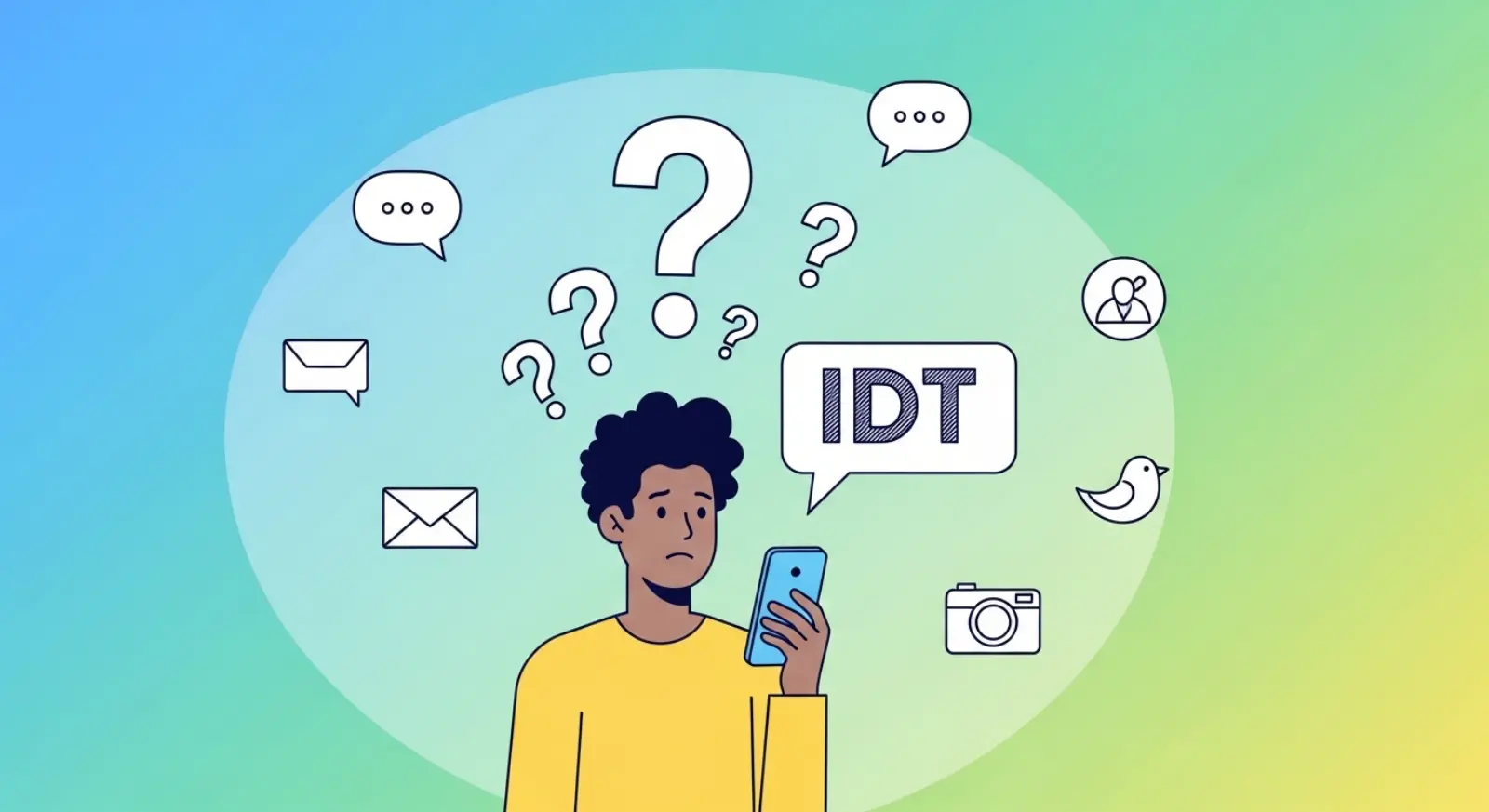
IDT meaning in text is something many people search for when they see this short abbreviation in chats, comments, or online conversations.
While it often appears simple, IDT can actually have multiple meanings depending on the context.
That’s why it sometimes confuses users especially if they’re new to internet slang or come across it in different situations.
In texting, abbreviations are used to save time and keep conversations quick and casual. But understanding the correct meaning is important to avoid misunderstandings.
⚡ Quick Answer:
IDT usually means “I Don’t Think” in text. However, it can also stand for other things depending on the context, such as “I Don’t Talk” or “Integrated Device Technology.”
What Does IDT Mean in Text?
The most common answer to IDT meaning in text is:
👉 IDT = I Don’t Think
It’s used to express:
- Doubt
- Disagreement
- Uncertainty
Example:
- “IDT that’s going to work.”
IDT Full Form / Definition
Primary Meaning:
- I Don’t Think (most common in texting)
Other Important Meanings:
Depending on context, IDT can also mean:
- I Don’t Talk → Used when someone is unwilling to communicate
- I Don’t Trust → Expressing lack of trust
- Integrated Device Technology → A well-known tech company
- International Dance Teachers → An organization or professional term
- Interdental → Used in medical or dental fields
👉 This is why context is key when understanding IDT.
Meaning in Different Contexts
1. Casual Texting (Most Common)
- “IDT I can come today.”
✔ Means: I don’t think
2. Emotional or Personal Context
- “IDT him anymore.”
✔ Means: I don’t trust
3. Avoiding Conversation
- “IDT rn.”
✔ Means: I don’t talk right now
4. Technical / Professional Context
- “This chip is made by IDT.”
✔ Refers to Integrated Device Technology
Is IDT Rude, Offensive, or Neutral?
- ✅ Neutral: Most of the time
- ⚠️ Can feel rude: If used abruptly
- ❌ Not offensive: Safe in general use
Example:
- “IDT that’s right.” → Neutral
- “IDT. Stop arguing.” → Can feel rude
Where Is IDT Commonly Used?
You’ll find IDT in:
- Text messages (WhatsApp, Messenger)
- Social media (Instagram, Facebook, X)
- Online gaming chats
- Comment sections
- Casual conversations
Real-Life Examples of Usage
Friendly Tone
- “IDT we’ve spoken before 😊”
Casual Tone
- “IDT I’m free today.”
Argumentative Tone
- “IDT you’re correct about this.”
Gaming / Social Media
- “IDT that move was smart.”
Origin and Background of IDT
IDT became popular with the growth of text messaging and internet slang culture. As people tried to communicate faster, they shortened common phrases into abbreviations.
Over time, IDT became widely recognized as “I Don’t Think,” but like many abbreviations, it evolved to have multiple meanings in different industries and contexts.
Comparison With Similar Slang
| Slang | Full Form | Meaning | Tone |
|---|---|---|---|
| IDT | I Don’t Think | Express doubt | Neutral |
| IMO | In My Opinion | Share opinion | Polite |
| TBH | To Be Honest | Honest statement | Casual |
| IDC | I Don’t Care | Shows disinterest | Can be rude |
| IDK | I Don’t Know | Lack of knowledge | Neutral |
When to Use and Avoid IDT
✅ Use IDT When:
- Chatting casually
- Talking to friends
- Commenting online
- Expressing opinions quickly
❌ Avoid IDT When:
- Writing formal emails
- Professional communication
- Academic work
- Speaking with unfamiliar audiences
Polite Alternatives to IDT
If you want to sound more respectful or formal:
- “I don’t believe that’s correct.”
- “I’m not sure about that.”
- “I think it might be different.”
- “I have a different opinion.”
Why Do People Use IDT?
People prefer IDT because:
- It saves time
- It’s easy to type
- It sounds natural in chats
- It softens disagreement compared to direct statements
Impact of Using Slang in Communication
Positive:
- Faster communication
- Friendly and casual tone
- Better connection in informal chats
Negative:
- Can confuse some people
- May sound unprofessional
- Tone can be misunderstood
Is IDT Safe for Social Media?
Yes, IDT is safe and widely accepted on social media.
However:
- Use carefully in public discussions
- Avoid in professional profiles or formal posts
Examples Section (Different Tones)
Friendly
- “IDT we’ve met before, right?”
Casual
- “IDT I’ll go out tonight.”
Argumentative
- “IDT that’s true at all.”
Gaming Context
- “IDT we can win with this strategy.”
Social Media Comment
- “IDT this trend will last.”
FAQs About IDT Meaning in Text
1. What does IDT stand for in texting?
It mainly stands for “I Don’t Think.”
2. Does IDT have multiple meanings?
Yes, it can also mean I Don’t Talk, I Don’t Trust, or technical terms depending on context.
3. Is IDT rude?
No, but it can sound rude if used without explanation.
4. Can IDT be used professionally?
No, it’s best for informal communication only.
5. What is the most common meaning of IDT?
“I Don’t Think” is the most widely used meaning.
6. How do I understand the correct meaning of IDT?
Look at the context of the conversation to determine its meaning.
Conclusion
Understanding the IDT meaning in text is essential for clear and effective communication in today’s digital world. While it most commonly means “I Don’t Think,” it can also have other important meanings like “I Don’t Trust,” “I Don’t Talk,” or even technical definitions such as Integrated Device Technology.
The key is context. Always consider the situation and audience before using or interpreting IDT. When used correctly, it can make your conversations quicker, smoother, and more natural—just be mindful of tone and setting.

I’m Maya Faith, a passionate writer who loves creating words that uplift and encourage others. Through my writing, I hope to bring comfort, peace, and a spark of faith to every reader. I believe that even in life’s storms, hope always finds a way to shine through. When I’m not writing, I enjoy quiet mornings, heartfelt prayers, and a good cup of coffee.