You’ve probably come across phrases like “I clocked that” or “yeah, I clock it 👀” in chats or on social media and maybe you stopped for a second wondering what it actually means.
Is it related to time? Is someone pointing something out? Or is there a hidden meaning behind it?
If you’re unsure, you’re not alone. The slang “clock it” can sound confusing at first because it’s not used in a literal way.
Instead, it’s part of modern internet language that people use to express awareness, observation, or even calling out something subtle in a situation.
In simple terms, it’s a phrase that shows someone has noticed or recognized something that might not be obvious to everyone.
⚡ Quick Answer:
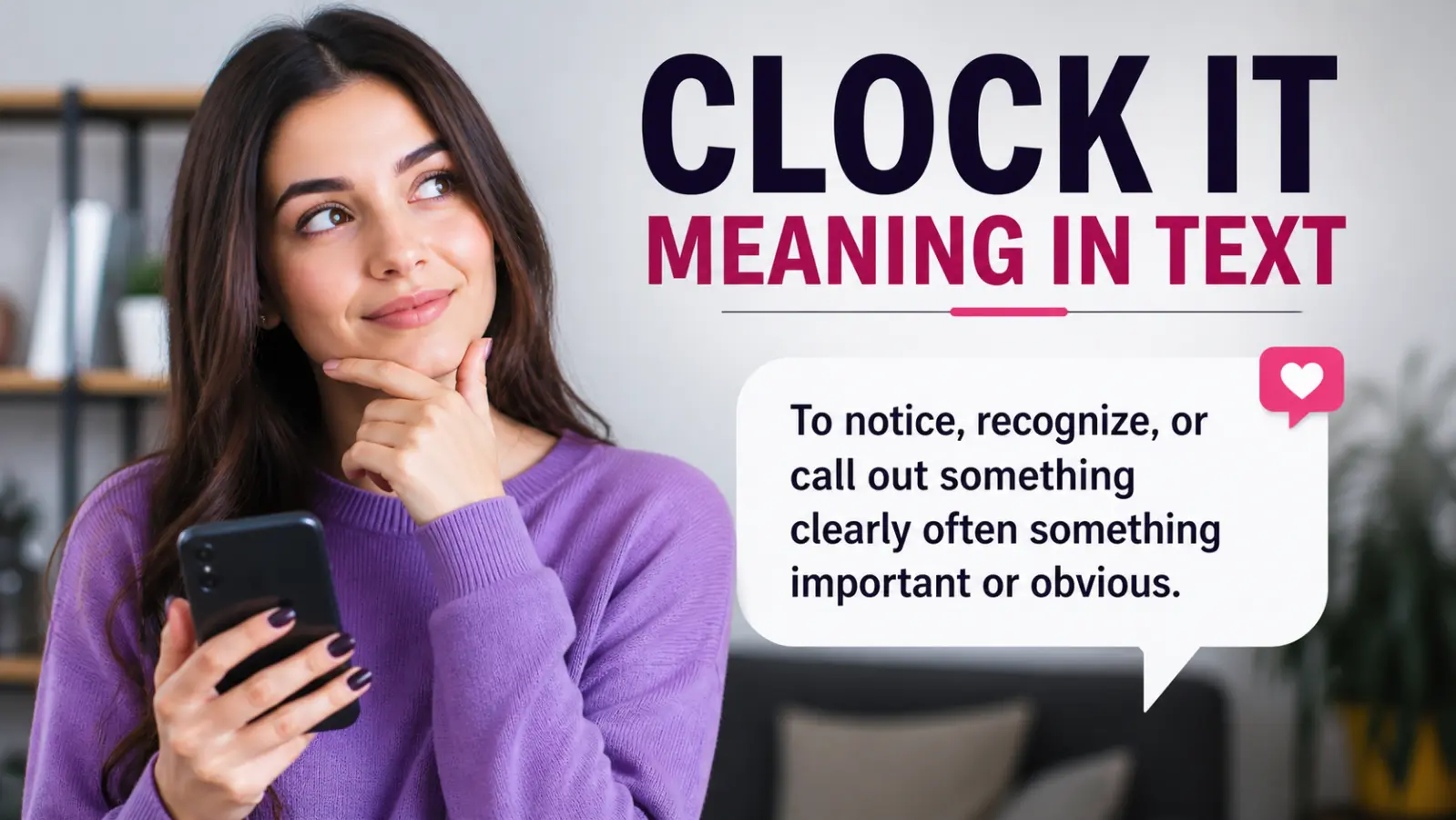
“Clock it” means to notice, recognize, or call out something clearly—especially something important, obvious, or suspicious.
What Does Clock It Mean in Text?
The phrase “clock it” is used when someone wants to say they noticed or pointed out something. It often carries a sense of awareness, like spotting something others may miss.
For example, if someone says, “I clocked that,” they mean they picked up on something—maybe a detail, behavior, or hidden meaning. It’s commonly used when the speaker feels observant or perceptive.
This phrase is especially popular in casual communication, where people want to sound expressive and sharp without using long sentences.
Full Form / Definition of the Slang
“Clock it” does not have a full form because it is not an abbreviation. Instead, it is a phrase that comes from the word “clock,” which traditionally means to measure or notice something.
In slang usage, it has taken on a more figurative meaning:
- To mentally register something
- To identify or recognize something quickly
- To call attention to a detail or behavior
So, instead of measuring time, it’s about mentally catching something in the moment.
Meaning in Different Contexts
The meaning of “clock it” can slightly change depending on how it is used:
1. Noticing Something
When used casually, it simply means observing something:
- “I clocked your new shoes.”
👉 You noticed them.
2. Calling Out Behavior
It can also mean pointing out something directly:
- “She clocked his fake smile.”
👉 She recognized it wasn’t genuine.
3. Understanding a Situation
Sometimes it shows awareness or realization:
- “I clocked what was happening.”
👉 You understood the situation clearly.
Each context adds a slightly different tone, but the core idea remains awareness and recognition.
Is It Rude, Offensive, or Neutral?
“Clock it” is generally a neutral slang term, but tone matters a lot.
- In a friendly tone → It sounds harmless or even playful
- In a serious tone → It may feel direct or slightly confrontational
- In arguments → It can come across as calling someone out
It’s not offensive by itself, but how you say it can change how people react.
Where Is It Commonly Used?
You’ll usually find this slang in informal settings such as:
- Text messages and chats
- Social media platforms like TikTok, Instagram, and Twitter
- Online discussions and memes
- Pop culture conversations
It’s especially common among younger audiences and people who follow internet trends closely.
Real-Life Conversation Examples
Here’s how “clock it” works in everyday conversations:
- Friendly: “I clocked your effort—you did great!”
- Casual: “Did you clock what she said?”
- Argumentative: “I clocked that lie immediately.”
These examples show how the phrase adapts to different tones depending on the situation.
Emotional and Psychological Meaning
Using “clock it” often reflects a person’s mindset:
- It shows awareness and attention to detail
- It can express confidence in understanding a situation
- It may reflect assertiveness, especially when calling something out
Psychologically, it can also signal that someone wants to:
- Be heard
- Highlight truth
- Show they are observant
Origin and Background of the Slang
The slang “clock it” comes from cultural language evolution, particularly:
- African American Vernacular English (AAVE)
- LGBTQ+ and drag communities
In these spaces, “clocking” someone often meant identifying something hidden or pointing out a truth—sometimes in a witty or bold way.
Over time, social media helped spread the phrase globally, making it a mainstream slang term.
Comparison With Similar Slang
| Slang Term | Meaning | Tone | Key Difference |
|---|---|---|---|
| Clock it | Notice or call out | Neutral/Direct | Balanced usage |
| Call out | Publicly criticize | Strong | More aggressive |
| Spot it | Notice something | Neutral | Softer tone |
| Read (someone) | Criticize cleverly | Sharp | More dramatic |
This comparison helps you understand when “clock it” is the better choice.
When to Use It and When to Avoid
Use It When:
- Talking with friends
- Engaging in casual chats
- Commenting on social media
- Expressing awareness or observation
Avoid It When:
- Writing formal emails
- Speaking in professional settings
- Dealing with sensitive topics
Using it in the wrong context can make you sound unprofessional or overly direct.
Polite Alternatives
If you want a softer tone, you can say:
- “I noticed that…”
- “I observed something…”
- “It seems like…”
These alternatives are more suitable for formal or respectful conversations.
Why People Use This Slang
There are several reasons why “clock it” is popular:
- It’s short and easy to say
- It sounds modern and trendy
- It expresses awareness quickly
- It adds personality to communication
People often prefer slang because it feels more natural and relatable.
Impact of Using Slang in Communication
Slang like “clock it” can influence communication in different ways:
Positive Impact
- Makes conversations engaging
- Builds connection with peers
- Reflects cultural awareness
Negative Impact
- May confuse some audiences
- Can sound unprofessional in formal situations
Balance is important when using slang.
Is It Safe for Social Media?
Yes, “clock it” is completely safe to use on social media.
However, keep in mind:
- Tone can change meaning
- Overuse may reduce impact
- Context matters for how it’s received
Used wisely, it can enhance your online communication.
Examples in Different Contexts
- Friendly: “I clocked your improvement—nice work!”
- Casual: “Did anyone else clock that moment?”
- Argumentative: “I clocked your behavior, don’t deny it.”
These variations show how flexible the phrase is.
Common Misunderstandings
Some people misunderstand “clock it” by thinking:
- It relates to time (like a clock)
- It means working hours (clock in/out)
- It is offensive slang
In reality, it simply means noticing or pointing something out.
Variations and Types
You might see different forms of this slang:
- “I clocked that”
- “Clock it!”
- “You got clocked”
- “Clocking behavior”
All variations keep the same basic meaning.
How to Respond When Someone Uses It
Your response depends on the situation:
- If it’s positive → “Glad you noticed!”
- If it’s neutral → “Yeah, I saw that too.”
- If it’s confrontational → “Let’s talk about it calmly.”
Responding appropriately helps avoid misunderstandings.
Regional and Cultural Usage
Although it started in specific communities, “clock it” is now used worldwide.
- Popular in Western internet culture
- Common among younger audiences
- Increasingly used globally through social media
In regions like South Asia, it’s mostly used by people familiar with online trends.
FAQs
1. What does “clock it” mean in slang?
It means to notice, recognize, or call out something clearly.
2. Is “clock it” rude?
No, but it can feel direct depending on tone.
3. What does “clock it stand for”?
It doesn’t stand for anything—it’s not an abbreviation.
4. Can I use “clock it” in formal writing?
It’s better to avoid it in professional contexts.
5. Where is “clock it” mostly used?
On social media, chats, and casual conversations.
6. Why is it popular?
Because it’s short, expressive, and trendy.
Conclusion
The Clock It Meaning in text revolves around noticing, recognizing, or calling out something clearly. While the phrase is simple, its tone and context can change how it’s perceived. It’s a powerful slang term that reflects awareness and confidence, making it popular in modern communication.
To use it effectively, focus on your audience and situation. In casual settings, it can make your language more engaging, while in formal situations, it’s better to choose more neutral alternatives.
Understanding slang like “clock it” not only improves your communication but also helps you stay connected with evolving language trends.

I’m Lila Grace, a passionate writer who finds joy in crafting thoughtful wishes and uplifting messages. I love turning simple words into meaningful expressions that touch hearts. My goal is to help people celebrate life’s beautiful moments through genuine writing. Each article I write reflects my belief in kindness, connection, and happiness.