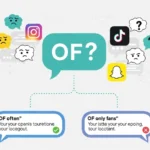
OF meaning in text is something many people search when they see this abbreviation in chats, TikTok comments, Instagram posts, or gaming conversations.
Internet slang changes fast, and “OF” is one of those short forms that can confuse readers because it has more than one meaning depending on context.
In modern digital communication, users prefer short abbreviations to save time, which is why “OF” is commonly used instead of longer phrases.
However, its meaning is not always the same everywhere, and understanding the context is very important.
Most people associate it with a popular online platform, but in casual texting it can also represent simple English usage or even conversational slang like agreement responses.
Quick Answer:
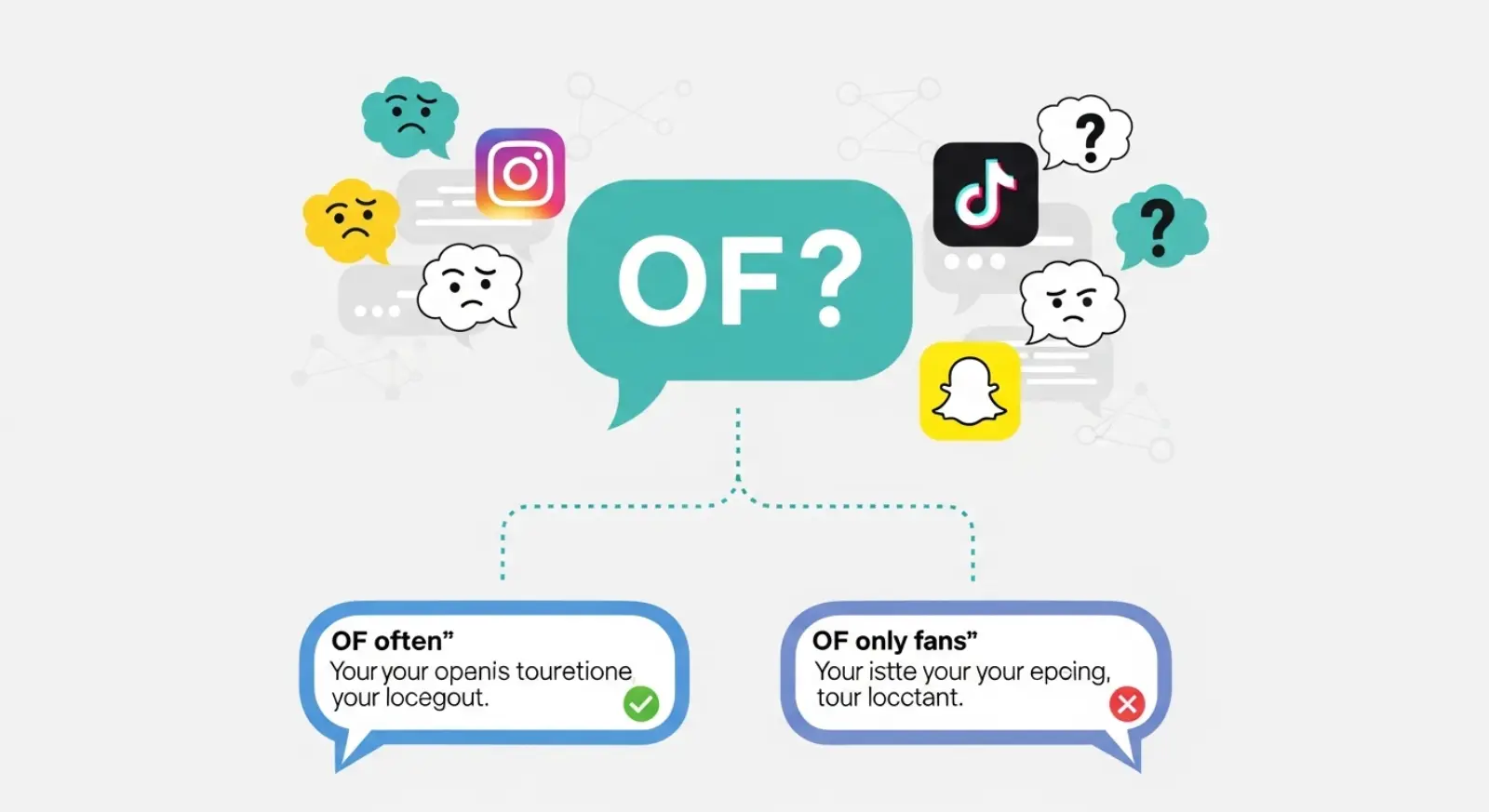
“OF” in text most commonly means OnlyFans, but it can also mean “of,” or in casual slang, “of course” depending on context.
What does OF mean in text?
The abbreviation “OF” has multiple meanings in online communication. It is important to understand each meaning to avoid confusion.
1. OF meaning as OnlyFans (most common)
In modern internet slang, OF usually refers to OnlyFans, a subscription-based content platform where creators share exclusive content with followers.
Examples:
- “She started an OF” → She created an OnlyFans account
- “He earns from OF” → He earns money from OnlyFans
This is the most widely recognized meaning on social media today.
2. OF meaning as “of” (basic English usage)
In normal English writing and texting, “OF” simply represents the word “of”, sometimes typed in uppercase by mistake or for emphasis.
Examples:
- “Cup OF tea”
- “End OF the story”
This usage is not slang — it is standard grammar.
3. OF meaning as “of course” (casual slang use)
In informal texting and quick replies, “OF” is sometimes used as a shortened form of “of course.”
This is less common than the OnlyFans meaning, but it appears in casual chats where people prefer extremely short responses.
Examples:
- “Can you help me?” → “OF!” (meaning: of course!)
- “Are you coming?” → “OF, I’ll be there.”
This usage is mostly found in:
- Fast texting conversations
- Friend groups
- Informal social media replies
4. Rare or contextual usage
In usernames, gaming tags, or online handles, “OF” may not have a fixed meaning and is simply part of a name.
Full form of OF
Depending on context:
- OnlyFans → Internet platform meaning
- of → English preposition
- of course → casual slang abbreviation
So, “OF” is not limited to one definition.
Meaning of OF in different contexts
Social media context
Mostly refers to OnlyFans, especially on TikTok, Instagram, and Twitter (X).
Chatting context
Can mean:
- OnlyFans
- “of”
- “of course” (quick replies)
Gaming context
Usually part of usernames with no fixed meaning.
Formal context
Simply means the word “of” and is not slang.
Is OF rude or offensive?
The abbreviation itself is not rude or offensive. However:
- “OF” meaning OnlyFans may be sensitive depending on audience
- “of course” usage is completely neutral
- “of” is standard English grammar
So meaning depends on situation, not the word itself.
Where is OF commonly used?
- TikTok comments and captions
- Instagram bios and replies
- Snapchat chats
- Twitter (X) posts
- Gaming usernames
- Private messaging apps
Real-life examples of OF usage
1. Friendly conversation
- “Can you send me the link?”
“OF, here you go!”
2. Casual chat
- “Do you know what OF means?”
“Yeah, it’s OnlyFans.”
3. Agreement tone
- “You coming tonight?”
“OF!”
4. Social media context
- “She launched her OF account last month.”
5. Grammar usage
- “End OF discussion.”
Origin of OF slang
The slang meaning of “OF” became popular after the rise of the OnlyFans platform in 2016. As creators promoted their pages online, they shortened “OnlyFans” to “OF” for convenience.
Later, internet users also began using “OF” in faster texting styles, including informal shorthand like “of course.”
Comparison with similar slang
| Slang | Meaning | Context |
|---|---|---|
| OF | OnlyFans / of / of course | Social media & chat |
| IG | Social media | |
| YT | YouTube | Platform abbreviation |
| SC | Snapchat | Messaging app |
| OFC | of course | Direct slang version |
👉 Note: “OFC” is more commonly used than “OF” for “of course,” but both appear in informal texting.
When to use and avoid OF
Use it when:
- Talking casually with friends
- Social media conversations
- Informal replies (“OF!” = of course)
Avoid it when:
- Writing professional emails
- Academic work
- Formal communication
- Situations where clarity is important
Why people use OF in texting
- Saves time and effort
- Easy to type quickly
- Popular in internet culture
- Works as shorthand in fast conversations
Impact of using OF in communication
Positive:
- Faster communication
- Trendy slang usage
- Easy understanding among online users
Negative:
- Can confuse beginners
- Misunderstood in formal settings
- Multiple meanings cause ambiguity
Is OF safe for social media?
Yes, “OF” is safe to use on social media platforms. However, users should be careful with context because it may refer to OnlyFans, which has adult content associations.
FAQs about OF meaning in text
1. What does OF mean in text?
It usually means OnlyFans, but can also mean “of” or “of course.”
2. Is OF the same as OFC?
No. “OFC” is a clearer abbreviation for “of course,” while “OF” is more context-based.
3. Can OF mean yes?
Yes, in some chats “OF!” is used as a quick way to say “of course” (yes).
4. Is OF always related to OnlyFans?
No, it depends on context.
5. Is OF slang or grammar?
It can be both slang and a normal English word.
6. Should I use OF in formal writing?
No, it is better to avoid it in formal communication.
Conclusion
The OF meaning in text is flexible and depends heavily on context. Most commonly, it refers to OnlyFans, a popular online platform. However, in everyday communication it can also simply mean the word **“of,”” or even the casual slang response “of course.”
Understanding these different meanings helps avoid confusion in chats, social media, and online conversations. While “OF” is widely used and safe in informal communication, it should be used carefully in professional or formal settings.
In short, context is everything — and that’s what determines what “OF” really means in text.

I’m Amara Hope, a writer who believes words can heal, inspire, and bring people closer. I love creating heartfelt wishes and joyful messages that brighten someone’s day. Every line I write carries a bit of love, hope, and positivity. Through my writing, I aim to spread kindness and make every moment meaningful.