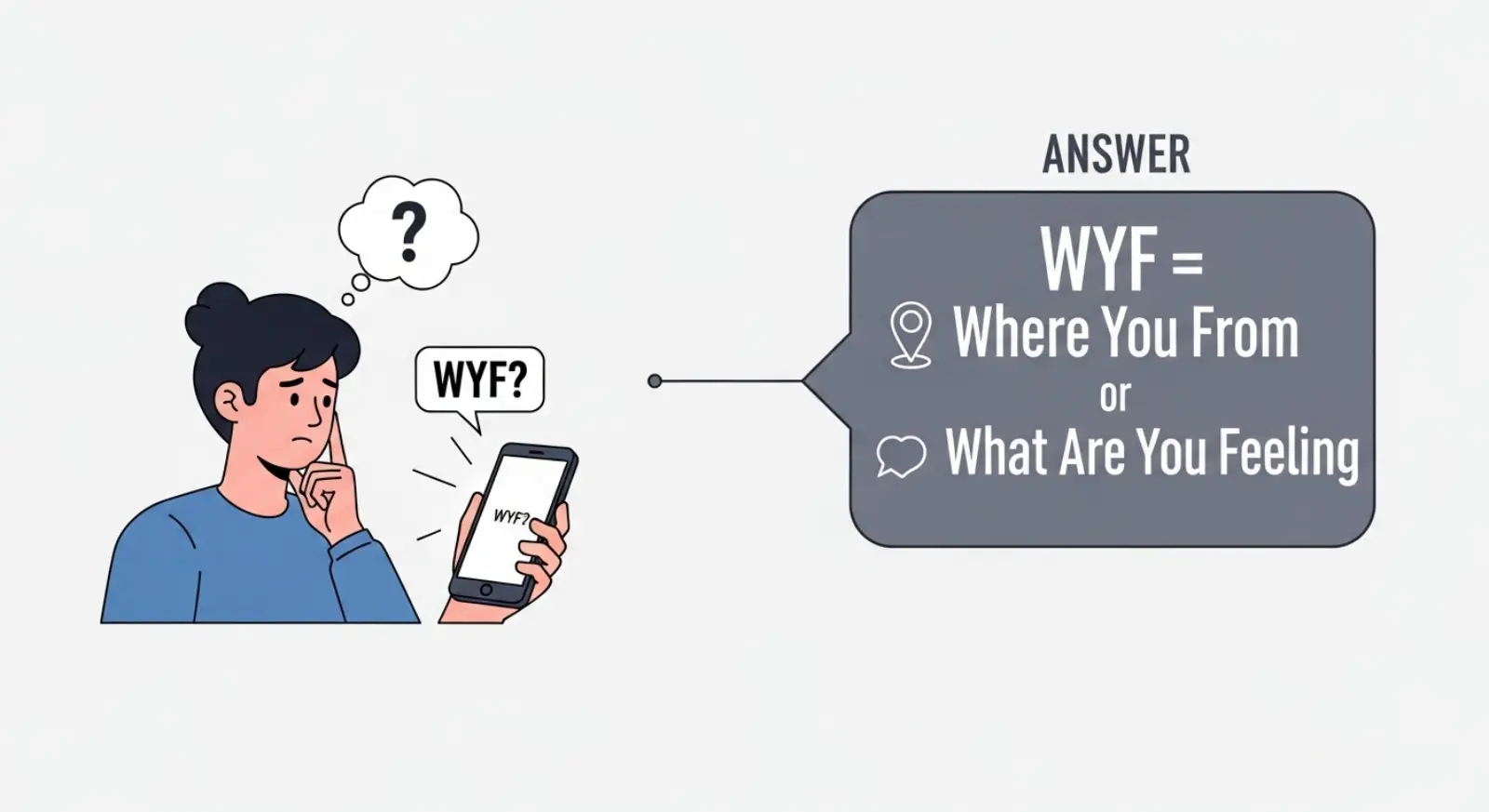
WYF meaning in text is a common question people ask when they come across this short slang in chats, social media, or messaging apps.
In today’s fast-paced digital world, abbreviations like WYF help people communicate quickly, but they can sometimes be confusing, especially if a slang term has more than one meaning.
If you’ve ever received a message like “WYF?” and weren’t sure how to respond, you’re not alone.
Understanding slang like WYF can help you avoid misunderstandings and communicate more effectively online.
⚡ Quick Answer:
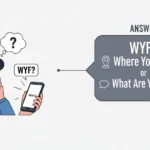
WYF in text usually means “Where You From?” but it can also mean “What Are You Feeling?” depending on the context.
What does WYF mean in text?
The WYF meaning in text is most commonly interpreted as:
- Where You From?
It is a simple and informal question used to ask someone about their origin, city, or country. People use it in texting, chatting apps, and social media platforms where short forms save time and effort.
WYF Full Form
- WYF = Where You From
- Used to ask someone about their location, city, or background.
👉 Example:
“Hey, WYF?”
WYF Meaning Slang
In slang terms, WYF is:
- Casual
- Informal
- Friendly (depending on tone)
What Are You Feeling (Less Common)
- WYF = What Are You Feeling
- Used to ask about someone’s emotions, mood, or thoughts.
👉 Example:
“You’ve been quiet… WYF?”
WYF Full Form
- WYF = Where You From (primary meaning)
- WYF = What Are You Feeling (secondary meaning)
Meaning in Different Contexts
The meaning of WYF depends heavily on how and where it’s used:
1. Friendly Conversation
- “Hi! WYF?” → Asking location
2. Emotional Chat
- “You okay? WYF?” → Asking feelings
3. Online Dating
- “Nice to meet you, WYF?” → Getting to know origin
4. Gaming or Social Platforms
- “GG! WYF?” → Casual introduction
Is WYF rude, offensive, or neutral?
WYF is generally neutral, but tone matters.
When it’s appropriate:
- Casual chats
- Friendly conversations
- Social media interactions
When it might feel rude:
- If used without greeting
- In serious or emotional conversations (if misused)
- When context is unclear
👉 Tip: Add a friendly tone:
“Hey! WYF?” sounds more polite than just “WYF?”
Where is WYF commonly used?
You’ll often see WYF on:
- Text messages (WhatsApp, SMS)
- Social media (Instagram, Facebook, Snapchat)
- Online games
- Dating apps
It’s especially popular among younger users and online communities.
Real-life examples of WYF usage
Here are examples showing both meanings:
- “Hey, WYF?”
- “We’ve been chatting, WYF?”
- “You seem off today… WYF?”
- “WYF? I’m from Lahore.”
Origin and background of WYF
The WYF meaning in text comes from the trend of shortening phrases for faster typing. As digital communication grew, people began using abbreviations to save time.
“Where are you from?” became:
- Where you from → WYF
Similarly, emotional expressions evolved:
- What are you feeling → WYF
It follows the same pattern as popular internet slang like:
- BRB (Be Right Back)
- LOL (Laugh Out Loud)
- IDK (I Don’t Know)
Comparison with similar slang
| Slang | Full Form | Meaning | Usage |
|---|---|---|---|
| WYF | Where You From | Asking origin | Most common |
| WYF | What Are You Feeling | Asking emotions | Less common |
| WYA | Where You At | Asking current location | Casual chats |
| WYD | What You Doing | Asking activity | Everyday texting |
| ASL | Age, Sex, Location | Intro info | Old chat slang |
👉 Key Difference:
- WYF (origin) vs WYA (current location)
- WYF (feelings) vs emotional questions
When to use WYF and when to avoid
✅ Use WYF when:
- Chatting casually
- Talking to friends
- On social media or gaming platforms
❌ Avoid WYF when:
- Writing formal emails
- Talking to professionals
- The context may cause confusion
Polite alternatives to WYF
If you want clearer or more formal communication, try:
For location:
- “Where are you from?”
- “Which city are you from?”
For emotions:
- “How are you feeling?”
- “What’s on your mind?”
Why people use WYF
People prefer WYF because it is:
- Quick and easy
- Casual and friendly
- Widely understood (in context)
- Trendy in digital communication
Impact of using slang in communication
👍 Advantages:
- Makes conversations relaxed
- Builds quick connections
- Saves time
👎 Disadvantages:
- Can cause confusion (like WYF’s dual meaning)
- Not suitable for formal settings
- May feel impolite if used incorrectly
👉 Context is everything when using slang.
Is WYF safe for social media?
Yes, WYF is generally safe, but be mindful:
Safe when:
- Talking casually
- Chatting with friends
Be cautious when:
- Sharing personal details
- Talking to strangers
- Discussing sensitive topics
Examples of WYF in different tones
Friendly
- “Hey! WYF? I’m from Karachi 😊”
Casual
- “WYF bro?”
Emotional
- “You’ve been quiet… WYF?”
Argumentative
- “Why do you care WYF?”
Gaming / Social Media
- “Nice match! WYF?”
FAQs about WYF meaning in text
1. What does WYF stand for in texting?
WYF stands for “Where You From” or “What Are You Feeling.”
2. Which meaning of WYF is more common?
“Where You From” is the most widely used meaning.
3. Is WYF a bad word?
No, WYF is not offensive. It is neutral slang.
4. How do I know which meaning is correct?
Check the context—whether the conversation is about location or emotions.
5. Can WYF be used professionally?
No, it’s best to avoid slang like WYF in professional settings.
6. What is the difference between WYF and WYA?
- WYF = origin or feelings
- WYA = current location
Conclusion
Understanding the WYF meaning in text is important for modern communication. While it most commonly means “Where You From,” it can also mean “What Are You Feeling” in emotional or personal conversations.
The key to using WYF correctly is context. In casual chats, it’s a quick and friendly way to communicate. However, in formal or sensitive situations, it’s better to use full phrases to avoid confusion.
By using slang like WYF thoughtfully, you can keep your conversations clear, engaging, and appropriate for any situation.

I’m Emily Hart, a writer who pours warmth and emotion into every wish I create. I love helping people express love, gratitude, and joy through heartfelt words. Writing about life’s special moments brings me true happiness. My goal is to inspire kindness and connection—one beautiful message at a time.