WTV meaning in text is something many people search for when they come across this short slang in chats, social media, or online conversations.
If you’ve ever seen someone reply with “wtv” and felt confused, you’re not alone. Internet slang keeps evolving, and abbreviations like this are used to save time and express emotions quickly.
If you’re texting friends, chatting in a game, or scrolling through comments, understanding these short forms helps you communicate better and avoid misunderstandings.
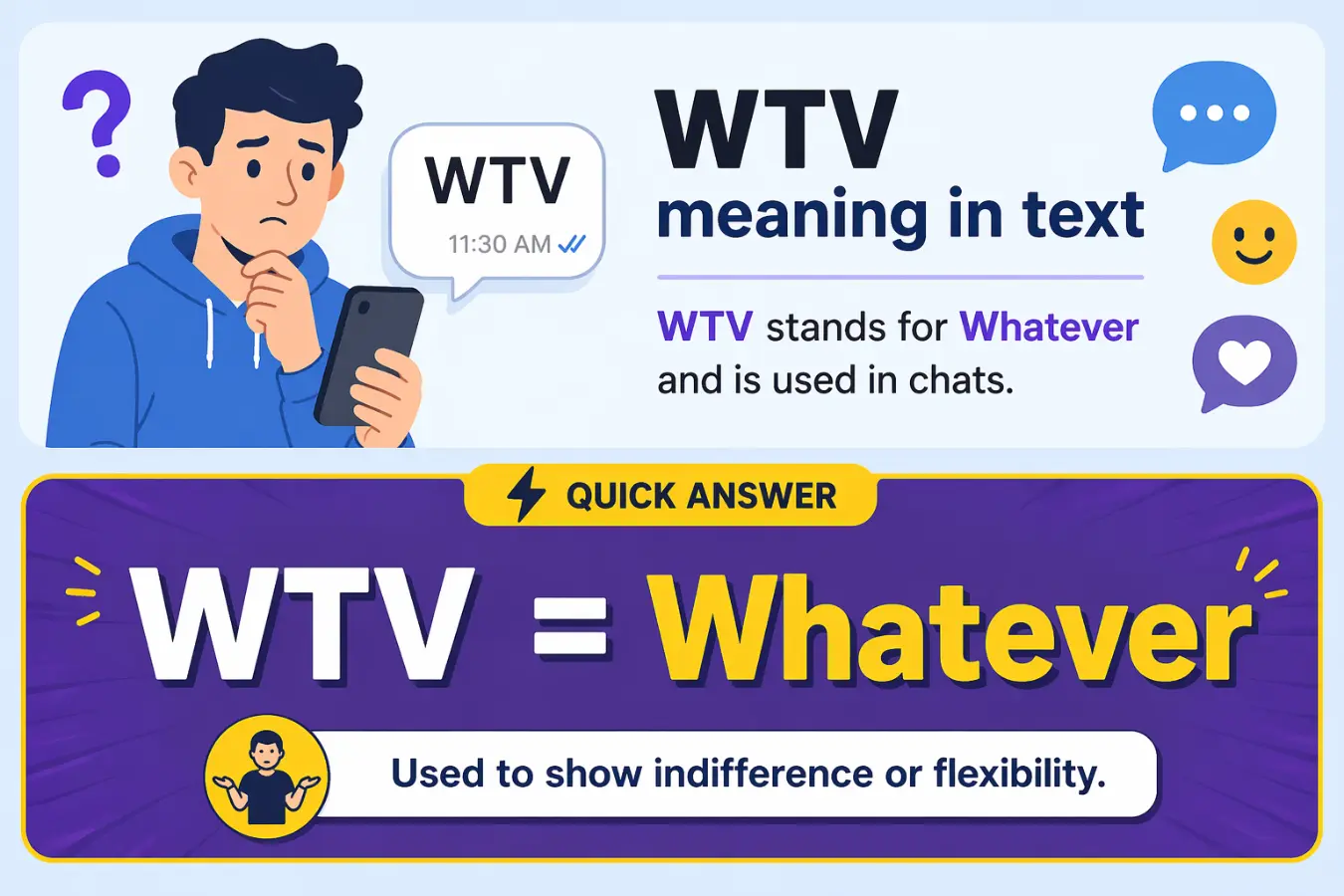
⚡ Quick Answer:
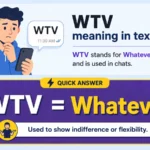
WTV stands for “whatever.” It is used to express indifference, lack of interest, agreement, or sometimes annoyance, depending on the tone.
What Does WTV Mean in Text?
The term WTV is a casual abbreviation of the word “whatever.” It is commonly used in texting, messaging apps, and social media platforms.
WTV Full Form
- WTV = Whatever
WTV Meaning Slang
In slang terms, WTV can mean:
- “I don’t mind”
- “It doesn’t matter”
- “Do what you want”
- “I’m not interested”
- “I don’t care anymore”
The meaning depends heavily on the situation and tone of the conversation.
Meaning of WTV in Different Contexts
The word WTV is flexible and can carry different meanings depending on how it’s used.
1. Neutral / Casual Use
Used when someone is okay with any option.
- Example: “We can eat pizza or burgers.”
“Wtv, you choose.”
👉 Meaning: I’m fine with anything.
2. Indifference
Shows lack of interest or concern.
- “I guess we’ll cancel the plan.”
“Wtv.”
👉 Meaning: It doesn’t matter to me.
3. Annoyance or Frustration
Can sound dismissive or rude.
- “You never listen to me!”
“Wtv.”
👉 Meaning: I don’t care / I’m done arguing.
4. Agreement Without Interest
Used when someone agrees but isn’t excited.
- “Let’s study tonight.”
“Wtv.”
👉 Meaning: Okay, but not enthusiastic.
Is WTV Rude, Offensive, or Neutral?
WTV is generally neutral, but it can become rude depending on tone and context.
When it’s neutral:
- Casual conversations with friends
- When showing flexibility
When it can be rude:
- During arguments
- When used to dismiss someone’s feelings
- In serious discussions
👉 Tip: Tone matters more than the word itself.
Where Is WTV Commonly Used?
You’ll often see WTV used in:
- Text messages (SMS)
- WhatsApp and Messenger chats
- Social media platforms (Instagram, Snapchat, TikTok)
- Online gaming chats
- Comment sections
It’s especially popular among younger users and in informal conversations.
Real-Life Examples of WTV Usage
Friendly Tone
- “Want to watch a movie or play games?”
“Wtv works for me!”
Casual Tone
- “Should we go now?”
“Wtv, I’m ready.”
Argumentative Tone
- “You never understand!”
“Wtv, I’m done talking.”
Gaming Context
- “Let’s attack now or wait?”
“Wtv, follow the team.”
Social Media Context
- “People are so dramatic these days.”
“Wtv 🤷♂️”
Origin and Background of WTV
The slang WTV comes from the word “whatever,” which has been used in English for decades. As texting became popular, people started shortening common words to save time.
With the rise of:
- SMS texting in the early 2000s
- Chat apps and social media
Abbreviations like LOL, BRB, IDK, and WTV became widely used.
WTV is part of this evolution of digital communication, where speed and convenience matter.
Comparison With Similar Slang
Here’s a quick comparison of WTV with similar slang terms:
| Slang Term | Full Form | Meaning | Tone |
|---|---|---|---|
| WTV | Whatever | Doesn’t matter / indifferent | Neutral to rude |
| IDC | I Don’t Care | Lack of concern | Slightly rude |
| IDK | I Don’t Know | Uncertainty | Neutral |
| NVM | Never Mind | Forget it | Neutral |
| Meh | — | Unimpressed / indifferent | Casual |
When to Use and Avoid WTV
✅ When to Use WTV
- With close friends
- In casual chats
- When you truly don’t have a preference
- In light-hearted conversations
❌ When to Avoid WTV
- In professional communication
- When someone is expressing emotions
- During serious discussions
- With people you don’t know well
Polite Alternatives to WTV
If you want to sound more polite or respectful, you can use:
- “It’s up to you”
- “I’m okay with anything”
- “You decide”
- “That works for me”
- “No preference from my side”
These alternatives avoid sounding dismissive.
Why Do People Use WTV?
People use WTV for several reasons:
- Convenience: It’s shorter than typing “whatever”
- Speed: Saves time while texting
- Casual tone: Fits informal conversations
- Emotional expression: Shows indifference or flexibility
- Trend: Popular among younger users
Impact of Using Slang in Communication
Using slang like WTV can affect communication in different ways:
Positive Impact
- Makes conversations quick and easy
- Feels natural and friendly
- Helps express emotions casually
Negative Impact
- Can be misunderstood
- May sound rude in the wrong context
- Not suitable for formal settings
👉 Balance is key—know your audience.
Is WTV Safe for Social Media?
Yes, WTV is safe to use on social media, but be mindful of tone.
Safe Usage Tips:
- Use it in casual posts or comments
- Avoid using it in sensitive discussions
- Add emojis to soften the tone (e.g., “wtv 😊”)
More Examples of WTV in Different Situations
Friendly
- “Let’s hang out tomorrow.”
“Wtv, I’m free!”
Casual
- “Tea or coffee?”
“Wtv.”
Argumentative
- “You always do this!”
“Wtv, believe what you want.”
Gaming
- “Push or defend?”
“Wtv, I’ll follow you.”
Social Media
- “Everyone has an opinion.”
“Wtv 🙄”
FAQs About WTV Meaning in Text
1. What does WTV stand for in texting?
WTV stands for “whatever.”
2. Is WTV rude?
It can be rude depending on tone, especially in arguments.
3. Can I use WTV in professional messages?
No, it’s best to avoid using slang like WTV in formal communication.
4. What is the difference between WTV and IDC?
- WTV = Whatever (more flexible)
- IDC = I don’t care (more direct and often ruder)
5. Is WTV commonly used by everyone?
It’s mostly used by younger people and in informal conversations.
6. Does WTV always mean “I don’t care”?
Not always—it can also mean “I’m okay with anything” depending on context.
Conclusion
Understanding the WTV meaning in text helps you communicate more clearly in today’s fast-paced digital world. While it simply stands for “whatever,” its tone can change from friendly to dismissive depending on how and where it’s used.
Use WTV in casual conversations with friends, but be careful in serious or professional situations. Choosing the right words based on context ensures your message is understood the way you intend.
In short, WTV is simple, useful, but powerful—use it wisely.

I’m Amara Hope, a writer who believes words can heal, inspire, and bring people closer. I love creating heartfelt wishes and joyful messages that brighten someone’s day. Every line I write carries a bit of love, hope, and positivity. Through my writing, I aim to spread kindness and make every moment meaningful.