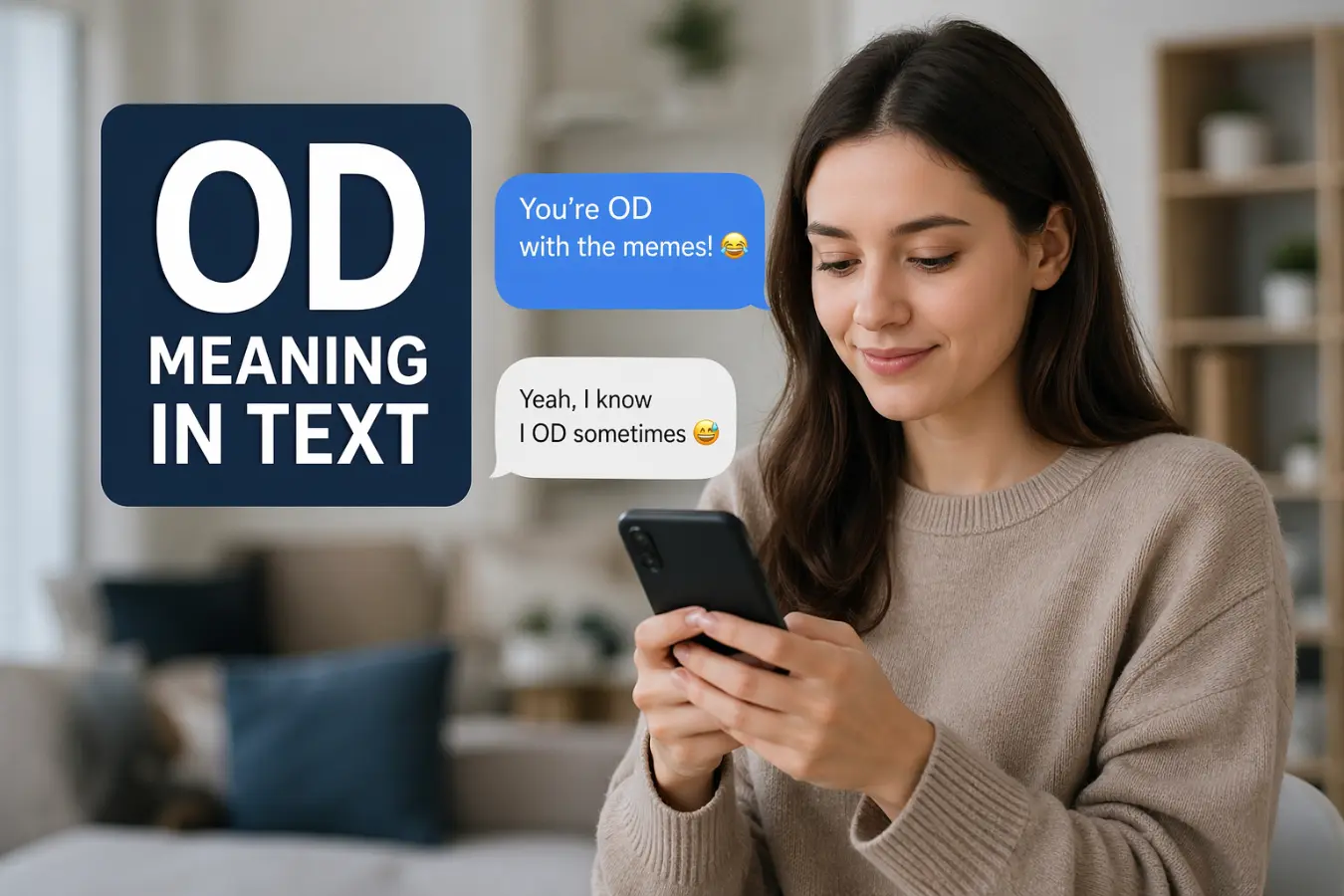
OD meaning in text is something you might have seen in chats, social media comments, or even gaming conversations and wondered what it actually means.
In today’s online world, people use short forms and slang to type faster and sound more casual.
Because of this, “OD” has become a popular abbreviation, but its meaning can change depending on the situation.
Sometimes it is used in a funny or casual way, while in other cases it can have a serious meaning, which makes it a bit confusing for beginners.
If you are trying to understand internet slang better, knowing terms like “OD” helps you follow conversations more easily and avoid misunderstandings.
⚡ Quick Answer:
“OD” in text usually means “overdoing it” in casual chats, or “overdose” in serious or medical contexts, depending on how it is used.
What Does OD Mean in Text?
The meaning of “OD” depends heavily on how it is used. It has two main interpretations:
1. OD as “Overdoing” (Slang Meaning)
In casual conversations, OD means doing something too much or going overboard.
- Example: “You’re OD with the jokes today 😂”
→ Meaning: You’re overdoing the jokes.
2. OD as “Overdose” (Serious Meaning)
In a medical or serious context, OD stands for overdose, usually related to drugs or medication.
- Example: “He had an OD and was taken to the hospital.”
→ Meaning: He overdosed.
OD Full Form / Definition
- OD full form (slang): Overdoing
- OD full form (medical): Overdose
OD Meaning Slang
In slang, “OD” is used to describe something excessive, exaggerated, or too much.
What Does OD Stand For?
- Overdoing (informal use)
- Overdose (formal/serious use)
Meaning in Different Contexts
Casual Conversations
- “OD” means exaggerating or doing too much
- Often used humorously or playfully
Social Media
- Used to react to something extreme
- Example: “That outfit is OD 🔥” (very stylish)
Medical or Serious Situations
- Refers to overdose
- Should be taken seriously and not joked about
Is OD Rude, Offensive, or Neutral?
- Neutral in slang context: When used to mean “overdoing,” it’s generally harmless
- Sensitive in medical context: When referring to overdose, it becomes serious and should be used carefully
👉 Tip: Always consider the situation before using “OD” to avoid misunderstandings.
Where Is OD Commonly Used?
You’ll often see “OD” in:
- Text messages (WhatsApp, Messenger)
- Social media platforms (TikTok, Instagram, Twitter/X)
- Gaming chats
- Online forums
It’s especially popular among younger audiences and internet users who prefer short, quick expressions.
Real-Life Examples of Usage
Friendly Tone
- “Bro, you’re OD funny today 😂”
- “That food was OD good!”
Casual Tone
- “You’re OD with the messages, relax 😅”
- “She’s OD obsessed with that show.”
Argumentative Tone
- “You’re OD dramatic for no reason.”
- “Stop OD reacting to everything.”
Gaming or Social Media Context
- “That move was OD insane 🔥”
- “This update is OD bad, devs need to fix it.”
Origin and Background of the Slang
The slang version of “OD” comes from the word “overdose,” which originally described taking too much of something. Over time, internet users adapted it into a casual term to describe anything excessive—not just drugs.
This shift is common in language evolution, where serious words become informal slang in digital culture.
Comparison With Similar Slang
| Slang Term | Meaning | Usage |
|---|---|---|
| OD | Overdoing / excessive | Casual, social media |
| Extra | Doing too much | Informal conversations |
| Too much | Excessive behavior | General use |
| Overboard | Going beyond limits | Slightly formal |
| Wild | Extreme or crazy | Youth slang |
👉 “OD” is more modern and trendy compared to traditional phrases like “too much.”
When to Use and When to Avoid
✅ When to Use “OD”
- In casual chats with friends
- On social media posts or comments
- In light, humorous situations
❌ When to Avoid “OD”
- In formal communication (emails, work messages)
- When discussing serious topics like health
- Around people who may misunderstand slang
Polite Alternatives
If you want a safer or more formal option, use:
- “Too much”
- “Excessive”
- “Over the top”
- “A bit much”
Example:
Instead of “You’re OD loud,” say “You’re being a bit too loud.”
Why People Use This Slang
People use “OD” because:
- It’s short and quick to type
- It sounds trendy and modern
- It adds emphasis to a statement
- It fits well in fast online conversations
Slang like “OD” helps make communication more expressive and engaging.
Impact of Using Slang in Communication
Using slang like “OD” can:
Positive Effects
- Makes conversations fun and relatable
- Helps connect with younger audiences
- Saves time while typing
Negative Effects
- Can confuse people unfamiliar with slang
- May sound unprofessional in formal settings
- Can be misinterpreted depending on context
Is It Safe for Social Media?
Yes, “OD” is generally safe for social media when used in its slang meaning. However:
- Avoid using it in sensitive topics
- Be mindful of your audience
- Use it appropriately to maintain clarity
Examples Section
Here are more examples showing different tones:
Friendly
- “You’re OD kind, seriously!”
- “That movie was OD amazing.”
Casual
- “He’s OD into fitness these days.”
- “This song is OD catchy.”
Argumentative
- “You’re OD annoying right now.”
- “Stop OD complaining.”
Gaming / Online
- “That boss fight was OD hard!”
- “This player is OD skilled.”
FAQs
1. What does OD mean in text slang?
It usually means “overdoing” or something excessive.
2. What is the full form of OD?
OD stands for Overdoing (slang) or Overdose (medical).
3. Is OD a bad word?
No, it’s not a bad word, but it can be sensitive if used in a medical context.
4. Can I use OD in formal writing?
No, it’s best to avoid slang like “OD” in formal communication.
5. Does OD always mean overdose?
No, in casual texting it usually means “too much” or “overdoing.”
6. Is OD popular on social media?
Yes, it’s widely used on platforms like TikTok, Instagram, and chat apps.
Conclusion
Understanding OD meaning in text is important because it can change depending on the situation. In most casual conversations, it simply means overdoing something or being excessive, while in serious contexts, it refers to an overdose.
The key to using “OD” correctly is context. Use it in friendly, informal settings where slang is acceptable, and avoid it in professional or sensitive discussions. Like many internet slang terms, “OD” adds personality to communication—but only when used wisely.

I’m Adam Johen, a passionate writer who enjoys crafting inspiring and joyful wish articles. I love helping people find the perfect words to celebrate life’s moments. Writing heartfelt messages brings me happiness and purpose. Through my work, I aim to spread smiles and positivity around the world.